
Visiting Yellowstone in winter takes more planning than a summer trip. Snow closes most park roads to regular vehicles, many facilities shut down for the season, and reaching popular attractions often requires a snowcoach or snowmobile.
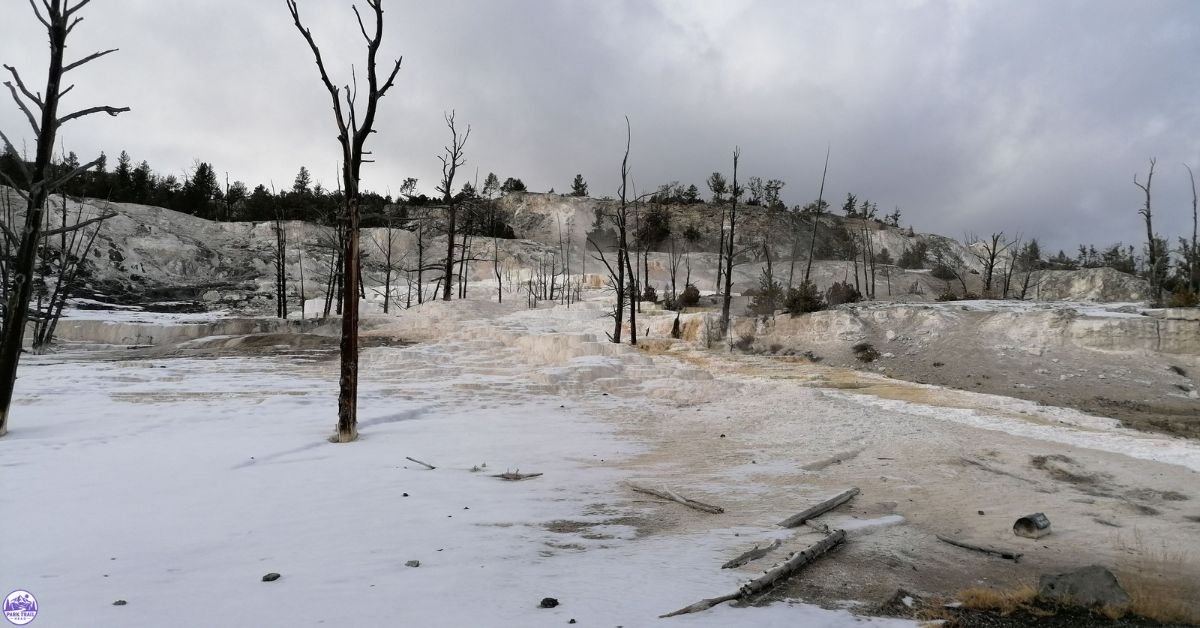
However, winter offers a different way to experience the park. Snow-covered valleys make wildlife easier to spot against the landscape, while steam rising from the geyser basins creates a striking contrast with the surrounding snow and ice.
The easiest way to plan this trip is to divide it into two parts. First, drive the open northern road through Mammoth Hot Springs and Lamar Valley to look for wildlife. Then, take an oversnow tour from Mammoth to Norris Geyser Basin.
These two experiences involve different transportation, schedules, and costs. Understanding those differences before booking can save you from choosing a route that is impossible to drive or scheduling two tours that overlap.
Quick Answer: Yellowstone in winter is best explored through two separate experiences: a self-drive along the northern road from Mammoth Hot Springs through Lamar Valley, and a guided snowcoach or authorized snowmobile trip to Norris Geyser Basin. For the 2026–27 season, the Mammoth-to-Norris oversnow road is projected to operate from December 15, 2026, through March 7, 2027. All seasonal dates depend on weather and snow conditions.
Yellowstone in Winter Is Really Two Different Trips
Before choosing your travel dates, understand one important detail: you cannot drive your regular vehicle to most Yellowstone attractions during winter.
The road connecting the North Entrance at Gardiner, Montana, with the Northeast Entrance near Cooke City is generally open to regular vehicles throughout the year. It passes through Mammoth Hot Springs and Tower Junction, making Lamar Valley accessible by car when weather conditions allow.
The situation changes when you want to explore Norris Geyser Basin. The road from Mammoth to Norris closes to regular vehicles during winter and becomes an oversnow route. Access is limited to authorized snowcoaches, guided snowmobiles, and qualifying permit holders.
This creates two different experiences:
- Northern road trip: Drive your own vehicle through Mammoth Hot Springs, Tower Junction, and Lamar Valley. This is the better option for visitors who want flexibility and wildlife photography opportunities.
- Mammoth-to-Norris excursion: Take a guided snowcoach or an eligible snowmobile trip to explore the winter scenery around Norris Geyser Basin.
Combining both experiences gives you a broader look at Yellowstone without depending on a single type of transportation.
If you only have one day, choose according to your interests. Lamar Valley makes more sense for wildlife watching, while Norris is the better choice for visitors interested in geysers, steam vents, and geothermal landscapes.
To compare these winter stops with the park’s other major sights, explore our guide to the best Yellowstone park activities, which covers geyser basins, waterfalls, wildlife areas, and scenic stops.
For current access information, check the NPS Park Roads page.
Yellowstone Winter Road Calendar: 2026–27 Dates
Most Yellowstone roads close to regular vehicles in early November. Once enough snow accumulates and winter routes are prepared, selected roads reopen for snowcoach and snowmobile travel.
The National Park Service has published the projected 2026–27 oversnow dates. The Mammoth-to-Norris segment is scheduled to open on December 15, 2026, and close on March 7, 2027.
Other oversnow routes remain available for slightly longer periods.
| Road segment | Allowed winter transportation | Projected 2026–27 dates |
| North Entrance to Northeast Entrance, through Mammoth and Tower Junction | Regular private vehicles | Open year-round, weather permitting |
| Mammoth Hot Springs to Norris | Guided snowcoaches, guided snowmobiles, and eligible permit holders | Dec 15, 2026 – Mar 7, 2027 |
| Norris to Madison and Canyon Village, plus Canyon to Washburn Hot Springs Overlook | Approved oversnow vehicles | Dec 15, 2026 – Mar 9, 2027 |
| Canyon Village to Fishing Bridge | Approved oversnow vehicles | Dec 15, 2026 – Mar 14, 2027 |
| Remaining groomed roads and West, South, and East entrances | Approved oversnow vehicles | Dec 15, 2026 – Mar 15, 2027 |
These dates are projections, not guaranteed opening or closing days. Snow conditions, storms, and other operational decisions can change the schedule.
The first and last weeks of the season deserve extra attention. Avoid booking expensive, nonrefundable transportation around those dates unless you are comfortable with the possibility of changes.
Before leaving for the park, check the official Yellowstone road status map. You can also call 307-344-2117 for recorded updates or text 82190 to 888-777 to receive road alerts.
Driving from Mammoth Hot Springs to Lamar Valley in Winter
For visitors who prefer to explore independently, the northern road is the most practical part of Yellowstone to drive in winter.
Starting at the North Entrance in Gardiner, the route takes you through Mammoth Hot Springs toward Tower Junction and Lamar Valley. You can continue toward the Northeast Entrance and Cooke City before returning along the same route.
The scenery changes as you travel. Mammoth offers access to its terraces and nearby facilities, while the open valleys farther east provide opportunities to look for wildlife.
Winter driving, however, requires more preparation than an ordinary scenic drive.
Black ice can develop even when the road appears clear. Snow-packed sections, sudden storms, and poor visibility can also slow your journey. NPS warns that assistance may take hours to reach drivers who become stranded.
Before setting out, carry the essential winter vehicle equipment recommended by the National Park Service:
- Snow tires suitable for winter conditions.
- A flashlight with extra batteries.
- A first-aid kit.
- A blanket or sleeping bag.
- Booster cables.
- A map.
- A shovel.
Allow more time than your navigation app suggests, particularly after fresh snowfall. Keep your fuel level high and avoid planning a tight schedule around a long winter drive.
One more important detail: do not plan a circular driving route through Cooke City. The Beartooth Highway between Cooke City and Red Lodge is closed during winter. In addition, nine miles of the Chief Joseph Scenic Byway between Cooke City and Pilot Creek are closed to wheeled vehicles during the winter season.
That means you should expect to return along the northern route rather than continue through these seasonal road closures.
Check the NPS road information and local road conditions before starting the drive.
Yellowstone Winter Wildlife: Where to Look and How to Stay Safe
Wildlife is one of the biggest reasons people visit Yellowstone during winter. Lamar Valley is particularly useful for wildlife watching because it forms part of the Northern Range, where animals such as bison, elk, wolves, and coyotes can be found.
Snow can also make some animals easier to notice against the open landscape. However, sightings are never guaranteed. The location and activity of wildlife change from day to day.
Early morning and late afternoon are useful times to look for animals. Visitors who would rather not drive themselves can also book a guided wildlife excursion from Mammoth Hot Springs Hotel.
There are two winter wildlife tours worth understanding:
Lamar Valley Wildlife Tour
This is the longer guided option. For the 2026–27 winter season, Xanterra lists departures on Thursdays, Saturdays, and Mondays from December 17, 2026, through March 6, 2027.
The tour checks in at 7:00 a.m. and returns around 2:00 p.m. The adult price is $236.28, while children ages 3–11 pay $118.14. Taxes and fees are included.
A morning muffin and juice are provided, along with a deli lunch. Guests should place their lunch orders at the hotel front desk by 7:00 p.m. the evening before departure.
Wake Up to Winter Wildlife Tour
This shorter morning excursion runs daily from December 16, 2026, through March 6, 2027. It departs at 6:15 a.m. and returns around 11:00 a.m.
The adult rate is $116.30, and the child rate is $58.15. A muffin and juice are included.
This tour explores wildlife habitat in the Northern Range, including Lamar Valley and Little America.
Both tours depart from Mammoth Hot Springs Hotel. Compare their schedules and prices on the official Lamar Valley Wildlife Tour and Wake Up to Winter Wildlife pages.
Wildlife Safety Rules You Should Never Ignore
Winter does not make Yellowstone’s wildlife less dangerous. Bears, wolves, bison, and other animals remain wild throughout the year.
The National Park Service requires visitors to maintain these minimum distances:
| Wildlife | Minimum distance |
| Bears and wolves | 100 yards |
| Bison and elk | 25 yards |
| Moose and other wildlife | 25 yards |
Carry bear spray even during winter and learn how to use it before entering the park.
Bison sometimes walk along plowed roads. Slow down and allow them to pass rather than attempting to drive around them closely. If you need to stop for photographs, use a designated or plowed pullout.
Never stand in the road to photograph wildlife. Snowplows, other vehicles, and animals can create dangerous situations.
A telephoto lens or binoculars will help you observe animals without getting too close. Keep food properly stored as well. Ravens in Yellowstone have learned to open some backpack fasteners and search for food.
Read the official NPS wildlife safety guidance before your visit.
Mammoth to Norris Geyser Basin: Choosing Your Winter Transportation
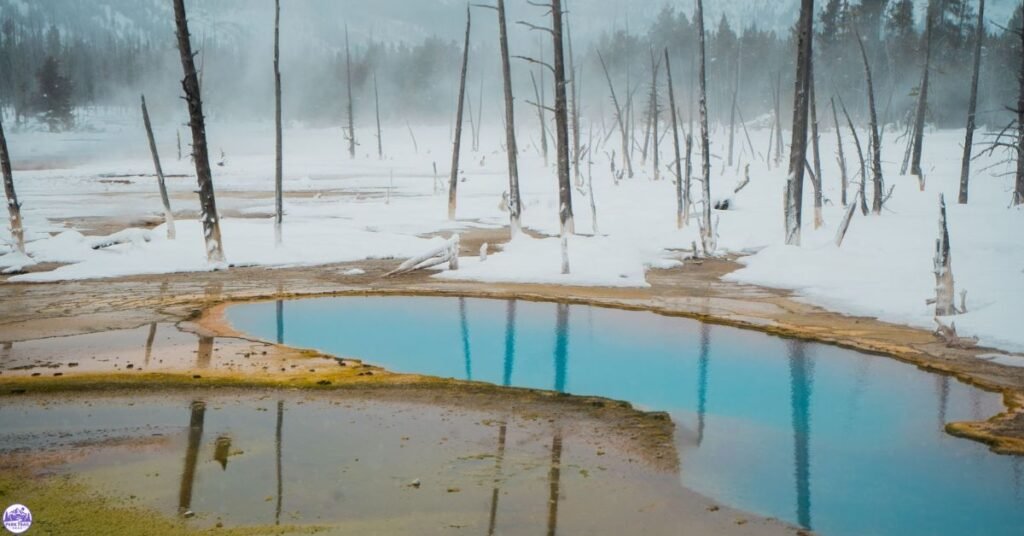
Norris Geyser Basin offers a different experience from the open northern road. Winter snow and ice cover the surrounding landscape, while geothermal activity continues beneath the freezing conditions.
The snowcoach ride is particularly useful for visitors who want to experience Norris without operating a snowmobile themselves.
The National Park Service lists the Mammoth-to-Norris route for oversnow transportation from December 15, 2026, through March 7, 2027.
You have three main transportation choices.
1. Guided Snowcoach Tour
For most first-time winter visitors, a guided snowcoach is the simplest option.
The coaches are heated, and a guide handles the winter driving. Passengers can enjoy the scenery without worrying about snowmobile controls, navigation, or operating requirements.
Xanterra’s Norris Geyser Basin Tour operates from December 15, 2026, through March 5, 2027.
| Tour detail | Current listing |
| Departure location | Mammoth Hot Springs Hotel |
| Operating days | Monday–Friday and Sunday |
| Check-in | 12:30 p.m. |
| Scheduled return | 5:30 p.m. |
| Adult price | $137.87 |
| Child price (ages 3–11) | $68.94 |
Prices include taxes and fees. Gratuities for guides are not included.
Although the snowcoach is heated, sightseeing stops involve going outdoors. Xanterra recommends warm footwear and layered clothing. Walking around Norris can also be strenuous, especially when snow and ice cover the ground.
Check the official Norris Geyser Basin Tour page for current bookings.
2. Commercially Guided Snowmobile Tour
A guided snowmobile trip is another way to explore Yellowstone’s oversnow routes.
This option is more suitable for visitors who prefer an open-air winter experience and are comfortable riding a snowmobile. A commercial guide handles the permitted route and provides the required supervision.
Tour operators establish their own schedules, equipment arrangements, and prices. Some trips also have specific requirements regarding snowmobile experience and physical ability.
Do not assume that every company can access every oversnow route. Check the authorized operator list on the NPS Guided Tours page and confirm the actual route before booking.
3. Non-Commercial Snowmobile Permit
Experienced snowmobilers can also apply through Yellowstone’s Non-Commercially Guided Snowmobile Access Program.
This program allows qualifying groups to explore the park without hiring a commercial guide. However, it is not an unrestricted alternative to a guided tour.
For the 2026–27 season, the application lottery ran from August 1 through August 31, with permits awarded in September. Any remaining or canceled permits became available on a first-come, first-served basis starting October 1. There is no waiting list.
The current permit fee is $40 per day plus a $6 application fee.
Important requirements include:
- A maximum of five snowmobiles per permit.
- A non-commercial guide who is at least 18 years old.
- All snowmobiles must meet the NPS New Best Available Technology (BAT) standards.
- All operators must be at least 16 years old, hold a valid driver’s license, and complete the Yellowstone Snowmobile Education Certification course.
- Non-commercial guides cannot charge participants for the trip.
Permit holders are responsible for group safety, navigation, first aid, equipment problems, and compliance with park regulations.
For someone visiting Yellowstone for the first time, a commercial tour is generally easier to manage. The permit program makes more sense for experienced riders who understand winter snowmobile travel.
See the NPS Snowmobiling page and Snowmobile Access Program Logistics for complete requirements.
Yellowstone Winter Tours: How to Plan Your Days Without Scheduling Conflicts
Choosing the right tours is only half the planning process. You also need to check the departure and return times before booking.
The Lamar Valley Wildlife Tour and Norris Geyser Basin Tour do not operate on identical schedules.
For the 2026–27 season, the Lamar tour runs on Thursdays, Saturdays, and Mondays. The Norris tour runs Monday through Friday and on Sundays.
This means a same-day combination does not work on Thursday or Monday. The Lamar tour returns at approximately 2:00 p.m., but the Norris tour requires check-in at 12:30 p.m.
If you want to experience both tours, use one of these pairings:
| Day | Recommended activity |
| Thursday | Lamar Valley Wildlife Tour |
| Friday | Norris Geyser Basin Tour |
| Saturday | Lamar Valley Wildlife Tour |
| Sunday | Norris Geyser Basin Tour |
| Monday | Lamar Valley Wildlife Tour |
| Tuesday | Norris Geyser Basin Tour |
Saturday and Sunday are a convenient combination for weekend visitors.
There is another option worth knowing about. Xanterra offers a 20% discount on its Norris Geyser Basin Tour when you book the separate Wake Up to Winter Wildlife Tour at the same time.
Since the wildlife tour departs at 6:15 a.m. and returns around 11:00 a.m., it can fit before the Norris tour’s 12:30 p.m. check-in on eligible days. Confirm the offer and booking availability directly with Xanterra.
You can also explore the Grand Canyon Day Tour from Mammoth, which offers another way to visit the park’s interior during winter.
Where to Stay for Yellowstone in Winter
Accommodation is an important part of winter planning because Yellowstone offers far fewer lodging choices during this season.
The two main in-park winter lodging properties are Mammoth Hot Springs Hotel and Old Faithful Snow Lodge.
For the Lamar Valley and Norris route, Mammoth Hot Springs Hotel is the more convenient base. Both featured tours depart from this location, and you do not need to arrange a separate snowcoach journey to reach the tour starting point.
According to the current National Park Service operating schedule, Mammoth Hot Springs Hotel lodging is available through March 7, 2027. Its dining room is scheduled to remain open through March 8.
Old Faithful Snow Lodge is scheduled to open on December 16, 2026. There is a small date difference between the published operating information: the NPS schedule lists March 6 as the last lodging day, while the concessioner’s lodging page lists March 7. Confirm the exact final night when making a reservation.
Remember that Old Faithful Snow Lodge is reached by oversnow transportation during winter. Personal vehicles cannot drive there on the closed seasonal roads.
If you plan to travel from Mammoth to Old Faithful, arrange transportation carefully. Xanterra states that the Bozeman airport shuttle and the snowcoach to Old Faithful cannot be booked for the same day. An overnight stay at Mammoth is required before taking the snowcoach to Old Faithful the following morning.
Mammoth Campground is another option because it operates year-round. Check current site availability and reservation rules before relying on it.
Nearby communities such as Gardiner and Cooke City also provide accommodation options, but you should check winter opening dates and road access before making a reservation.
One additional restriction matters for visitors traveling with pets: animals other than service dogs are not allowed on Xanterra buses or snowcoaches.
Check the official NPS Operating Dates and Yellowstone National Park Lodges Opening and Closing Dates before booking.
A Realistic 4-Day Yellowstone Winter Itinerary
A four-day visit provides enough time to enjoy the two main experiences without rushing between tours.
This sample itinerary assumes you fly into Bozeman Yellowstone International Airport and use the Xanterra winter shuttle to reach Mammoth Hot Springs Hotel.
You must have a qualifying Xanterra hotel reservation or tour booking to use this shuttle.
For the 2026–27 season, the listed one-way adult fares are:
- Bozeman Airport to Mammoth: $110.81.
- Mammoth to Bozeman Airport: $115.25.
The airport-to-Mammoth service checks in at 1:30 p.m. and is estimated to arrive at 4:00 p.m. The return shuttle checks in at 8:00 a.m. and is estimated to arrive at the airport around 10:30 a.m.
Avoid booking the arrival shuttle if your flight lands after 1:30 p.m. Xanterra also advises against booking the return shuttle if your flight departs before noon because weather and road conditions can affect arrival times.
| Day | Travel plan | Why this works |
| Friday | Fly into Bozeman, take the scheduled shuttle to Mammoth, and check into your hotel | Leaves time to settle in before the first tour |
| Saturday | Join the Lamar Valley Wildlife Tour from 7:00 a.m. to 2:00 p.m. | Provides a full guided wildlife excursion |
| Sunday | Take the Norris Geyser Basin Tour from 12:30 p.m. to 5:30 p.m. | Keeps the morning available as a weather and rest buffer |
| Monday | Take the 8:00 a.m. shuttle back to Bozeman | Provides an estimated airport arrival around 10:30 a.m. |
This itinerary works because the two tours run on separate days, giving you time to enjoy each experience without a scheduling conflict.
However, winter weather can affect transportation. Avoid connecting flights with very short layovers, and leave additional time wherever possible.
Visitors traveling with their own vehicle can build a similar three- or four-day itinerary. You can drive Lamar Valley independently on a separate day and use guided transportation for Norris.
Yellowstone in Winter: Hazards That Can Change Your Plans
Winter in Yellowstone is beautiful, but the conditions deserve serious attention.
The National Park Service reports that daytime highs can approach 30°F (-1°C), while nighttime temperatures can drop to -30°F (-34°C).
The park also sits at elevations of 6,000 feet or higher. Cold, dry air and altitude can contribute to dehydration, even when you do not feel particularly thirsty.
Carry enough drinking water in insulated bottles to prevent it from freezing. Pack high-energy snacks, especially when spending several hours outside.
Slippery Roads and Boardwalks
Snow and ice can make roads, walking paths, and thermal-area boardwalks difficult to navigate.
Traction aids that fit over your boots are worth packing. They can improve your footing when walking near Norris and other winter sightseeing areas.
Stay on designated boardwalks in geothermal areas. Snow can hide fragile ground, and the thin crust around thermal features may cover dangerously hot water.
Limited Phone Service
Do not rely on mobile data or regular phone service during your visit.
NPS warns that visitors may not receive calls or text messages, even in places where some cellular coverage exists.
Download the free NPS app and its offline content before arriving. Carrying a paper map is also a sensible backup.
Anyone planning to ski or snowshoe away from developed areas should review backcountry conditions and avalanche information. The Gallatin National Forest Avalanche Center is an important resource for local avalanche forecasts.
Changes in Road Conditions
Weather can turn a manageable drive into a difficult one.
Check the current road status before every driving day. If conditions deteriorate, change your plans rather than trying to reach a destination at any cost.
The northern road is maintained for regular winter traffic, but that does not mean it is always safe or open during every storm.
Read the complete NPS Winter Safety Guide before your trip.
Gear for Yellowstone in Winter That Deserves a Place in Your Bag
Your clothing should be suitable for standing outside in freezing temperatures, not just walking around for a few minutes.
A good layering system is more practical than relying on one extremely thick coat.
Start with a moisture-wicking base layer made from wool or synthetic material. Add insulating layers, then finish with a windproof and waterproof outer shell.
Avoid cotton because it does not retain warmth effectively when wet.
A useful winter packing list includes:
- Thermal base layers and insulating mid-layers.
- A windproof, insulated winter jacket.
- Wool or synthetic socks.
- Insulated waterproof boots.
- Gloves or warm mittens.
- A balaclava, hood, or neck gaiter.
- Sunglasses and sunscreen.
- Boot traction aids.
- An insulated water bottle.
- High-energy snacks.
- Bear spray.
For snowmobile trips, additional equipment may be required, including an insulated snowmobile suit, helmet, face shield, and appropriate goggles.
Even on heated snowcoach tours, you will need warm clothing for stops outside the vehicle.
Photographers should also think about battery performance in cold temperatures. Keeping spare batteries insulated and close to your body can help reduce the problems caused by extreme cold.
Review the NPS Winter Safety recommendations for the complete clothing and preparation guidance.
Six Mistakes That Can Waste a Yellowstone Winter Day
A little preparation can prevent many of the problems visitors encounter during winter travel.
1. Booking two tours with overlapping schedules
The Lamar Valley tour returns around 2:00 p.m., while the Norris tour requires check-in at 12:30 p.m. Do not attempt to book both on the same Thursday or Monday.
2. Treating projected opening dates as guaranteed
The December 15 opening and March closing dates depend on weather and snow conditions. Check the NPS road status before finalizing your travel plans.
3. Planning a driving loop through Cooke City
The Beartooth Highway closes for the winter, and part of the Chief Joseph route is also closed to wheeled vehicles. Plan to return along the same northern road.
4. Stopping in the road to photograph wildlife
Bison can create unexpected traffic delays. Use designated pullouts and never stand in the road for a better photograph.
5. Depending entirely on your phone
Mobile service is limited. Save offline maps, download the NPS app content, and carry a paper map.
6. Ignoring transportation and lodging requirements
The Old Faithful snowcoach and Bozeman airport shuttle cannot be arranged for the same day through Xanterra. Plan an overnight stay at Mammoth before traveling onward to Old Faithful.
These details may look minor when planning at home, but they can make a significant difference once winter conditions affect the schedule.
Who Should Consider Skipping Yellowstone in Winter?
Winter is not the right season for every Yellowstone visitor.
If you prefer spontaneous road trips, this may not be the best time to visit. Most roads are closed to regular vehicles, popular destinations require oversnow transportation, and only a limited number of lodges and services remain open.
It may also be uncomfortable for travelers who struggle with extended exposure to freezing temperatures. NPS reports that nighttime lows can reach -30°F, so warm clothing and careful preparation are essential.
Pet owners should also check transportation restrictions before booking. Pets other than service dogs cannot travel on Xanterra buses or snowcoaches.
On the other hand, winter is worth considering if you enjoy wildlife watching, quiet landscapes, photography, and geothermal features.
The park has fewer visitors than during its busy summer months, and the northern road provides an opportunity to explore part of Yellowstone without joining a guided tour.
If a storm interrupts your plans, check the official road status, contact your tour provider about possible changes, and use the open facilities around Mammoth. The Albright Visitor Center, Mammoth General Store, and Mammoth Medical Clinic are listed as year-round facilities, although individual holiday closures apply.
Frequently Asked Questions About Yellowstone in Winter
Can you drive to Norris Geyser Basin in winter?
No. Regular vehicles cannot use the Mammoth-to-Norris road during winter. For 2026–27, NPS projects oversnow access from December 15, 2026, through March 7, 2027.
Visitors can reach Norris through an authorized snowcoach tour, a commercially guided snowmobile tour, or an eligible non-commercial snowmobile permit.
Can I snowmobile in Yellowstone without a guide?
Certainly, but only through the Non-Commercially Guided Snowmobile Access Program.
You need an approved permit, and the group must follow NPS requirements for snowmobile equipment, driver qualifications, and training.
For the 2026–27 season, permits cost $40 per day plus a $6 application fee. Remaining and canceled permits may be available through Recreation.gov on a first-come, first-served basis.
Do I need a reservation to enter Yellowstone in winter?
You do not need a vehicle reservation to enter Yellowstone. However, you do need a valid entrance pass.
The standard entrance fees currently listed by NPS are:
- Private vehicle: $35 for seven consecutive days.
- Snowmobile: $30 for seven days.
- Individual entry on foot, bicycle, or skis: $20 for visitors aged 16 or older.
An additional fee also applies to international visitors. Non-U.S. residents aged 16 and older must pay an extra $100 per person unless admitted with an eligible Annual or America the Beautiful Pass. This requirement also applies to nonresident visitors traveling with commercial and concessioner tour groups.
Check the latest Yellowstone Fees & Passes page before departure.
How cold does Yellowstone get in winter?
According to the National Park Service, daytime temperatures can approach 30°F (-1°C), while nighttime lows can reach -30°F (-34°C).
Conditions vary, so prepare for extreme cold, wind, snow, and icy walking surfaces.
Is Lamar Valley worth visiting in winter?
Yes, particularly for visitors interested in wildlife. Lamar Valley is part of Yellowstone’s Northern Range, where bison, elk, wolves, and other wildlife can be seen.
Early morning and late afternoon are useful viewing periods, although sightings depend on natural animal activity and weather conditions.
Is Mammoth Hot Springs Hotel open during winter?
Yes. Mammoth Hot Springs Hotel is one of the two main in-park lodging properties operating during the 2026–27 winter season. NPS currently lists its last lodging day as March 7, 2027.
It is also a convenient base for the Lamar Valley and Norris tours.
Can you visit Old Faithful in winter?
Yes, but you cannot drive your personal vehicle there during the winter road closure.
Visitors can reach the Old Faithful area using authorized snowcoach or snowmobile transportation. Old Faithful Snow Lodge is scheduled to open on December 16, 2026.
Final Thoughts: Planning a Yellowstone Winter Trip
When you know the difference between the northern road and the oversnow routes, Yellowstone in winter is easier to enjoy.
The drive through Mammoth Hot Springs and Lamar Valley offers a practical way to look for wildlife without booking a guided vehicle tour. Norris Geyser Basin, on the other hand, requires a snowcoach, guided snowmobile, or qualifying permit.
For visitors who want both experiences, staying at Mammoth Hot Springs Hotel and booking the Lamar Valley Wildlife Tour on Saturday followed by the Norris Geyser Basin Tour on Sunday is a convenient plan. It keeps the two excursions separate and avoids the Thursday and Monday scheduling conflict.
Before you leave, confirm your tour dates, lodging, entrance pass, and transportation arrangements. Check the NPS road status again because winter conditions can change quickly.
With realistic expectations and the right equipment, you can experience two very different sides of Yellowstone during its quietest and snowiest season.
Author Bio
Awais is the Founder and Editorial Director of ParkTrailsGuide. Working with a network of outdoor contributors and current park data, he creates deeply researched survival guides, packing frameworks, and safety blueprints for U.S. national parks. His mission is to turn complex official National Park Service data into clear, actionable travel resources.
1 thought on “Yellowstone in Winter: Lamar Valley and Mammoth-to-Norris Route Guide”