

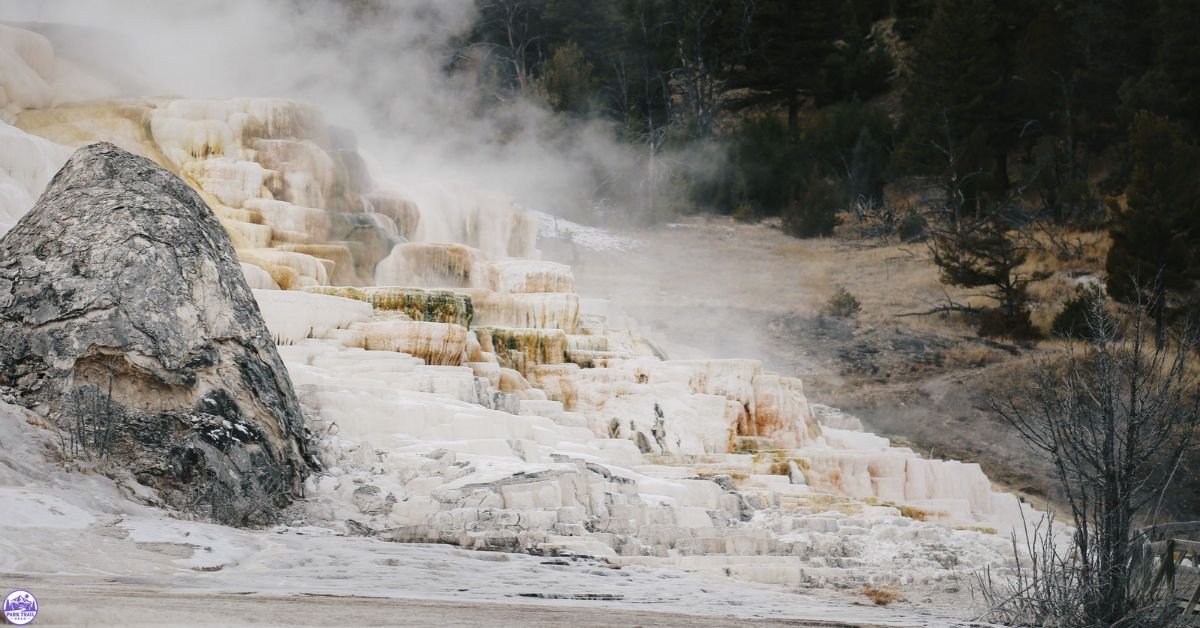
October brings a different kind of beauty to Yellowstone National Park. The summer rush begins to fade, autumn colors appear across the valleys, and cooler temperatures create dramatic steam clouds around the park’s famous geysers and hot springs.
It is also a month of change. Mornings can be cold enough for frost, higher elevations may receive fresh snow, and some roads and visitor services begin closing for the winter season. A trip that looks straightforward on a summer map can become more complicated as October progresses.
That does not mean October is a bad time to visit. In fact, it can be an excellent month for travelers who enjoy wildlife watching, quieter viewpoints, and crisp autumn scenery. The key is knowing what remains accessible and planning your route around seasonal conditions.
This guide covers Yellowstone weather in October, road closures, fall wildlife viewing, places to explore, accommodation options, and a practical four-day itinerary to help you plan your visit.
Quick Answer: October can be a rewarding time to visit Yellowstone, especially during the first half of the month. You can enjoy cooler hiking conditions, autumn scenery, wildlife activity, and fewer visitors than during the busiest summer period. However, snow can affect travel at any time, high-elevation roads may close earlier, and many hotels, restaurants, and campgrounds operate on reduced schedules. Check the National Park Service (NPS) road and facility updates before setting out.
Weather in Yellowstone in October: What Should You Expect?
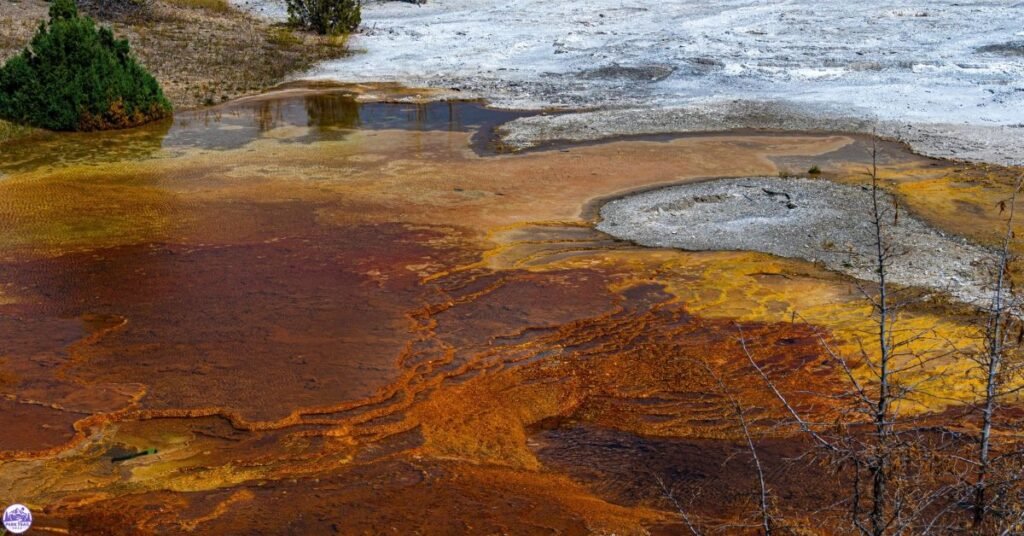
October is when Yellowstone begins its transition from fall to winter. Temperatures vary considerably depending on where you are in the park, particularly because the higher-elevation areas are generally colder than Mammoth Hot Springs.
You might enjoy a sunny afternoon in the northern part of the park and encounter much colder conditions near Yellowstone Lake on the same day.
According to the National Park Service, typical October weather looks like this:
| Location | Average High | Average Low | Average Snowfall |
| Mammoth Hot Springs | 54°F (12°C) | 30°F (-1°C) | 4.4 inches |
| Yellowstone Lake | 47°F (8°C) | 24°F (-4°C) | 10.6 inches |
These are monthly averages, not daily forecasts. Actual conditions can be considerably warmer or colder, and snowfall is more common at higher elevations.
Early October generally offers more comfortable daytime conditions. As the month progresses, freezing temperatures and winter storms become increasingly important considerations.
What Does Early October Feel Like?
The first half of October can still feel like autumn, especially in lower-elevation areas.
You may find golden grasses, colorful trees, cool mornings, and comfortable afternoons when the sun is shining. Wildlife watching and scenic driving can be enjoyable during this period.
However, temperatures can drop quickly after sunset. An apparently pleasant morning can also turn cold when clouds move in or wind picks up.
What Changes in Late October?
Late October requires more preparation.
Snow becomes increasingly likely, especially around higher elevations and mountain passes. Roads may become slippery, and temporary closures can disrupt travel plans.
Daylight also becomes shorter, leaving less time to visit multiple attractions. It is sensible to begin sightseeing early and avoid planning long drives late in the afternoon.
Before leaving your accommodation, check the official Yellowstone weather and seasonal conditions.
Yellowstone Road Closures in October: What Travelers Need to Know
Road access is one of the most important things to consider when visiting Yellowstone in October.
The park has a large network of roads connecting its geyser basins, valleys, lakes, and scenic viewpoints. However, these roads do not all remain open throughout the year.
As winter approaches, the National Park Service closes roads and entrances to prepare for snowmobile and snowcoach operations.
Early October: Better Access to the Park
During early October, most of Yellowstone’s main roads are generally open, weather permitting.
This gives visitors a better opportunity to explore different areas of the Grand Loop Road, including:
- Mammoth Hot Springs
- Norris Geyser Basin
- Old Faithful
- Grand Prismatic Spring
- Grand Canyon of the Yellowstone
- Hayden Valley
- Yellowstone Lake
- West Thumb Geyser Basin
Even with most roads open, temporary snow-related closures can occur. Always check the road status before committing to a long driving route.
Mid-October: High-Elevation Roads Become More Vulnerable
Mountain roads are particularly sensitive to changing weather.
Dunraven Pass, which connects Tower-Roosevelt and Canyon Village, and the Beartooth Highway outside the Northeast Entrance are examples of routes that typically close around mid-October.
Their actual closing dates can change depending on snowfall and road conditions. In 2026, the NPS announced that Dunraven Pass would remain open through October 31, weather permitting, despite its earlier projected seasonal closing date.
This is a good example of why visitors should check updated announcements rather than relying on a fixed date from an older travel guide.
Late October: Plan Around the Northern Entrance
The park’s regular-vehicle road schedule changes significantly at the end of October.
For 2026, the National Park Service announced that October 31 would be the final day visitors could drive most park roads. The West, South, and East entrances closed to regular vehicle traffic on November 1.
The route connecting Gardiner, Mammoth Hot Springs, Tower Junction, Lamar Valley, and Cooke City remains the main year-round vehicle route, weather permitting.
This makes the northern part of Yellowstone particularly important for late-October travelers.
A useful planning tip: Do not assume that a four-day Grand Loop itinerary will work during the last few days of October. Check the exact road schedule for your travel dates and be prepared to change your plans.
For official updates, use the Yellowstone Park Roads page and Current Conditions page.
Best Things to Do in Yellowstone in October
Although October brings shorter days and fewer operating facilities, there are still plenty of reasons to explore the park.
The combination of cooler temperatures, autumn scenery, active wildlife, and steaming thermal features creates a different experience from a summer visit.
Here are some worthwhile places and activities to include in your itinerary.
For a broader list of year-round highlights, explore our guide to the best Yellowstone Park activities.
1. Watch Wildlife in Lamar Valley
Lamar Valley is one of Yellowstone’s best-known wildlife viewing areas.
October can be an interesting month to explore this part of the park because wildlife activity changes as animals prepare for winter.
You may see bison grazing across open meadows, elk moving through the landscape, and predators such as wolves traveling through the valley.
Early morning and late afternoon are useful times to look for wildlife because many animals are more active during cooler parts of the day.
Bring binoculars or a spotting scope so you can observe animals without approaching them.
Remember that wildlife sightings are never guaranteed. Weather, animal movements, and seasonal conditions all influence what you might see.
2. Explore Mammoth Hot Springs
Mammoth Hot Springs is especially appealing during the colder months.
Its limestone terraces create unusual formations, and the contrast between steaming thermal features and cool autumn air can make the area particularly attractive for photography.
You can explore the designated boardwalks and look at the different terrace formations while enjoying the surrounding mountain scenery.
Mammoth also has an important practical advantage: it is located along Yellowstone’s northern year-round road route.
That makes it a useful destination for visitors traveling in late October, when access to other parts of the park becomes limited.
3. Visit Old Faithful and Upper Geyser Basin
Old Faithful is one of Yellowstone’s most recognizable attractions, and October can be a beautiful time to see it.
Cooler temperatures often make the steam rising from the geyser particularly noticeable against the surrounding landscape.
The Upper Geyser Basin has additional thermal features and walking paths, giving visitors more to explore beyond the main eruption viewpoint.
Check the estimated eruption information displayed by the park when you arrive. Geyser predictions are estimates and may change as new observations become available.
Also, check seasonal facility operating dates before expecting restaurants, shops, or visitor services to be available.
4. See Grand Prismatic Spring
Grand Prismatic Spring is another popular stop for an October visit.
Its colorful water, surrounding mineral deposits, and rising steam create an impressive contrast with the cooler autumn environment.
The boardwalk provides a designated route for viewing the thermal feature from close range. You can also consider the Grand Prismatic Overlook if its trail and parking access are available.
Crowds may be lighter than during peak summer, but this is still a popular attraction. Parking availability depends on the day and time, so avoid assuming that every October visit will be quiet.
5. Explore the Grand Canyon of the Yellowstone
The Grand Canyon of the Yellowstone offers dramatic scenery throughout the year.
Its colorful canyon walls, waterfalls, and forested surroundings make it a worthwhile stop during autumn.
Artist Point is one of the best-known viewpoints for seeing the Lower Falls and the canyon landscape.
The North and South Rim areas have several viewpoints, although individual trails and facilities can be affected by seasonal conditions.
Take extra care around the viewpoints if temperatures have dropped overnight. Frost and ice can make steps, pavement, and exposed walking areas slippery.
6. Look for Wildlife in Hayden Valley
Hayden Valley is another excellent area for wildlife watching.
Its open grasslands and river corridors provide habitat for bison, elk, waterfowl, and other animals.
As October progresses, the changing seasonal conditions may bring more noticeable wildlife activity in lower-elevation areas.
Drive slowly, use designated pullouts, and avoid stopping in the road when animals appear.
A pair of binoculars can make a considerable difference when viewing wildlife from a safe distance.
7. Enjoy the Scenery Around Yellowstone Lake
Yellowstone Lake is particularly scenic during autumn.
Its surrounding mountains, open shoreline, and changing weather create beautiful opportunities for photography.
West Thumb Geyser Basin is another worthwhile stop in this area. Its boardwalk allows visitors to explore thermal features beside the lake.
Keep in mind that facilities around the lake begin closing earlier than some northern services. Check the current schedule before planning meals, overnight stays, or extended stops in this area.
A Flexible 4-Day Yellowstone October Itinerary
A four-day trip can cover several of Yellowstone’s major attractions, provided the roads you need remain open.
This itinerary is best suited to early October, when most of the main driving routes are generally accessible.
Day 1: Mammoth Hot Springs and Lamar Valley
Enter Yellowstone through Gardiner, Montana, and begin your day at Mammoth Hot Springs.
Explore the terraces and enjoy the surrounding scenery before continuing toward the northern range.
Spend the afternoon driving through Lamar Valley. Look for bison herds, elk, and other wildlife along the valley roads.
Allow plenty of time for wildlife viewing because animals may appear unexpectedly, and traffic can slow when large herds gather near the road.
Return to your accommodation in the Mammoth or Gardiner area.
Day 2: Norris Geyser Basin and Old Faithful
Start your second day by visiting Norris Geyser Basin.
The basin has a variety of geothermal features and walking trails that make it an interesting stop for visitors who enjoy Yellowstone’s volcanic landscape.
Continue toward Midway Geyser Basin to see Grand Prismatic Spring.
Later, visit Old Faithful and explore the Upper Geyser Basin. Check the predicted eruption window when you arrive so you can plan your walk accordingly.
Stay overnight in an available gateway community or an operating park accommodation.
Day 3: Grand Canyon of the Yellowstone and Hayden Valley
Spend the morning exploring the Grand Canyon of the Yellowstone.
Visit the accessible viewpoints along the North and South Rims, including Artist Point, and allow enough time to appreciate the waterfalls and canyon scenery.
In the afternoon, travel through Hayden Valley.
This is a good opportunity to look for bison, elk, birds, and other wildlife. Take your time, use designated pullouts, and maintain a safe viewing distance.
Day 4: West Thumb Geyser Basin and Yellowstone Lake
Begin your final day near Yellowstone Lake.
Visit West Thumb Geyser Basin and follow its boardwalk to see geothermal features near the shoreline.
After exploring the area, consider departing through the South Entrance toward Grand Teton National Park if the road is open.
Your departure route should always be based on the latest NPS road information.
How to Adjust This Itinerary for Late October
The four-day route above depends on access to Yellowstone’s main interior roads.
By late October, that access may no longer be available. After most roads close for the winter, visitors arriving by car should plan around the northern route.
A more practical late-October plan is to concentrate on Mammoth Hot Springs, the northern range, Lamar Valley, and the Gardiner–Cooke City corridor.
Instead of trying to cover the whole park, spend more time exploring the areas that remain accessible.
Where to Stay in Yellowstone in October
Accommodation planning becomes more important as October progresses.
Some park hotels, restaurants, campgrounds, and visitor facilities close before the end of the month. Others remain open for the transition into the winter season.
Do not assume that a property will be available simply because it appears on a summer travel map.
Camping Inside Yellowstone
Mammoth Campground is the main established campground that operates year-round.
During the colder months, camping here requires preparation for freezing overnight temperatures and changing weather.
The NPS lists Mammoth Campground as open year-round. According to the current camping information, sites are first-come, first-served from October 16 through April 16, with payment through Recreation.gov’s Scan and Pay system.
Other campgrounds have different seasonal schedules.
For example, Madison Campground’s 2026 operating schedule ends October 16. Several other campgrounds closed earlier.
Check the official Yellowstone campground information before planning an overnight stay.
Remember that overnight parking or sleeping in roadside pullouts and parking areas is not an alternative to staying at a designated campground.
Staying at Park Hotels and Lodges
Hotel schedules also vary by location.
For the 2026–27 season, the Mammoth Hot Springs Hotel and Cabins are scheduled to remain open through March 7, 2027.
Old Faithful Snow Lodge has a different schedule, with its fall lodging season ending October 30, 2026.
The Old Faithful Inn is scheduled to close for fall lodging on October 10, while Lake Yellowstone Hotel’s lodging season ends October 9.
These differences make checking individual operating dates especially important when planning a trip.
You can find the latest schedules on the NPS Operating Dates page.
Staying in Nearby Gateway Communities
Gateway towns provide another option, particularly when in-park accommodation is unavailable.
Gardiner, Montana: A practical choice for late October because it provides access to Yellowstone’s northern entrance and the year-round northern road route.
West Yellowstone, Montana: A popular base for summer visitors, with accommodation and dining choices. However, its park entrance closes to regular vehicle traffic for winter, so it is not the best choice for accessing the park by car after the seasonal closure.
Cody, Wyoming: A useful eastern gateway during the regular operating season. However, the East Entrance road closes for winter, so check the schedule carefully before booking a late-October stay.
For a late-month trip, Gardiner is generally the most convenient of these communities for accessing the remaining northern road network.
Common Mistakes to Avoid When Visiting Yellowstone in October
A little preparation can prevent several common travel problems.
1. Planning Your Trip Around Summer Road Access
One of the biggest mistakes is assuming every road will remain open throughout October.
A route that works during July may be inaccessible near the end of the month. Check the seasonal road schedule and keep an alternative route available.
2. Packing Only Lightweight Clothing
October mornings can be freezing, particularly near Yellowstone Lake and other higher-elevation locations.
A light jacket may be comfortable in the afternoon but insufficient during an early wildlife drive.
Pack clothing that allows you to add or remove layers as conditions change.
3. Underestimating Driving Distances
Yellowstone is a large park, and driving between major attractions can take several hours.
Wildlife-related traffic, construction, weather delays, and road closures can make journeys even longer.
Avoid packing too many destinations into a single day.
4. Depending on Restaurants and Shops That May Be Closed
Food services and visitor facilities operate on seasonal schedules.
During October, some restaurants may close while other businesses continue operating.
Bring snacks and drinking water, and check restaurant hours before leaving your accommodation.
5. Approaching Wildlife for Photographs
Wild animals can behave unpredictably, particularly when they are feeding or defending their young.
Never approach an animal for a closer photograph.
The National Park Service requires visitors to remain at least 100 yards from bears, wolves, and cougars, and at least 25 yards from all other wildlife, including bison and elk.
Use binoculars or a telephoto lens instead.
Essential Packing Checklist for Yellowstone in October
Packing for Yellowstone in October means preparing for both autumn weather and occasional winter conditions.
You do not need to bring every piece of winter equipment available, but your clothing and emergency supplies should be suitable for freezing temperatures and unexpected snow.
| Item | Why You Need It |
| Thermal base layers | Provide insulation during cold mornings |
| Fleece or insulated jacket | Adds warmth during outdoor activities |
| Waterproof, windproof outer shell | Helps protect against wind, rain, and snow |
| Warm gloves and hat | Keep your hands and head comfortable |
| Waterproof hiking boots | Improve comfort and grip on wet trails |
| Traction cleats | Can help on icy trails when appropriate |
| Bear spray | A useful wildlife safety precaution |
| Binoculars | Help you observe wildlife from a safe distance |
| Reusable water bottle | Keeps drinking water available during sightseeing |
| Ice scraper | Helps clear frost from your vehicle |
| Emergency blankets | Provide additional protection during unexpected delays |
| Flashlight or headlamp | Useful during shorter autumn daylight hours |
| Offline maps or paper maps | Help with navigation where mobile coverage is limited |
Avoid relying on cotton clothing as your primary insulating layer. Wool and synthetic fabrics are generally more suitable for cold, changeable conditions because they manage moisture better.
If you are camping, bring an appropriately rated sleeping bag, an insulated sleeping pad, and a tent designed for the forecast conditions.
Bear spray should be accessible rather than buried inside your luggage. Learn how to use it before entering bear country.
For additional preparation, review the official Yellowstone safety guidance.
Frequently Asked Questions About Yellowstone in October
Is October a good time to visit Yellowstone?
Yes. October can be a good time to visit if you enjoy autumn scenery, wildlife watching, and cooler temperatures.
The first half of the month is generally better for travelers who want to explore several parts of the park because more roads and facilities are usually available.
Late October requires greater flexibility because winter conditions and seasonal closures become more likely.
Can you drive through Yellowstone in October?
Yes. Most of Yellowstone’s main roads generally remain open during early October, weather permitting.
However, high-elevation roads may close earlier, and most regular-vehicle roads and three entrances close around the beginning of November.
For 2026, October 31 was the final day for driving most park roads. The North-to-Northeast Entrance route remains open year-round, weather permitting.
Does it snow in Yellowstone in October?
Yes. October snowfall is common, especially at higher elevations.
The NPS reports average October snowfall of 4.4 inches at Mammoth Hot Springs and 10.6 inches at Yellowstone Lake.
Actual snowfall can vary significantly from year to year, so monitor the weather forecast before your visit.
Is Yellowstone crowded in October?
Yellowstone is generally less busy than during the peak summer months, although the NPS classifies October as moderately busy.
You may find a more relaxed atmosphere at some viewpoints and scenic stops, but popular attractions can still attract visitors.
Is Lamar Valley worth visiting in October?
Yes. Lamar Valley is worth including in an October itinerary, especially if wildlife watching is one of your priorities.
Bison, elk, wolves, and other animals may be seen in the area, although sightings depend on wildlife movements and weather conditions.
Early morning and late afternoon are useful times to look for animals.
Are Yellowstone hotels open in October?
Some hotels remain open during October, while others close earlier in the month.
For example, Mammoth Hot Springs Hotel is scheduled to remain open into the winter season in 2026–27, while Old Faithful Inn and Lake Yellowstone Hotel have earlier fall closing dates.
Always check the operating schedule of your specific accommodation before booking.
What is the best part of October to visit Yellowstone?
Early October is generally the best choice for visitors who want broader access to the park’s major attractions.
Late October may suit travelers who are comfortable with colder weather and are happy to focus on the northern part of Yellowstone.
Final Thoughts: Is Yellowstone Worth Visiting in October?
Yellowstone in October offers a different experience from the busy summer season. Autumn colors, cooler temperatures, wildlife activity, and steam rising from geothermal features make this a memorable time to explore the park.
However, October is not a month for a rigid travel schedule. Weather conditions can change quickly, high-elevation roads may close, and accommodation and dining options become more limited as winter approaches.
For the best balance of sightseeing opportunities and seasonal scenery, consider planning your visit during the first half of October. Travelers arriving later in the month should focus on the northern part of the park and choose accommodation with reliable road access.
Most importantly, check the latest National Park Service updates before driving, hiking, or making overnight plans.
With suitable clothing, realistic driving plans, and a flexible itinerary, an October visit can be an enjoyable way to experience Yellowstone before winter takes hold.
Author Bio
Awais is the Founder and Editorial Director of ParkTrailsGuide. Working with a network of outdoor contributors and current park data, he creates deeply researched survival guides, packing frameworks, and safety blueprints for U.S. national parks. His mission is to turn complex official National Park Service data into clear, actionable travel resources.
1 thought on “Yellowstone in October: Weather, Road Closures & Essential Fall Travel Tips”