

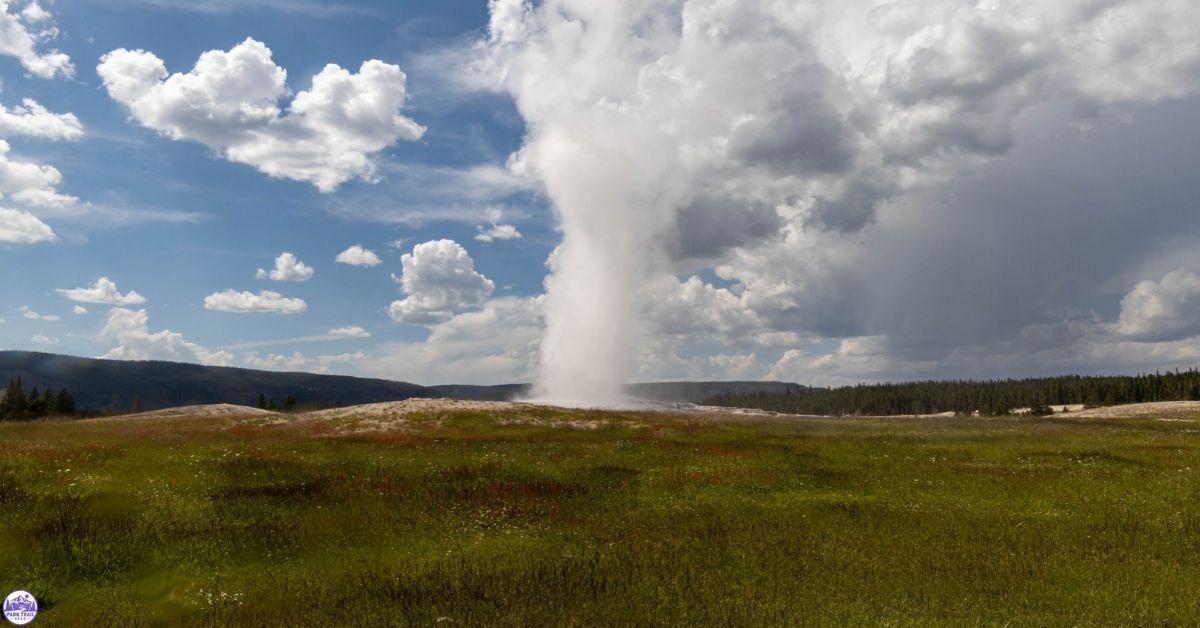
Planning a visit to Old Faithful sounds simple: arrive, find a place to watch, and wait for the geyser to erupt. The tricky part is knowing when that eruption will happen. Unlike a scheduled show, Old Faithful does not follow an exact hourly timetable. Its next eruption is estimated using information from the previous one, so visitors need to check the latest prediction rather than rely on a fixed schedule.
The good news is that you do not have to spend your entire visit sitting on a bench. Old Faithful is surrounded by the Upper Geyser Basin, where boardwalks lead past colorful hot springs, smaller geysers, and other interesting thermal features. With a little planning, you can explore the area while keeping an eye on the next predicted eruption.
Old Faithful is only one of the highlights worth adding to a Yellowstone itinerary. For more ideas, explore our guide to the best Yellowstone Park activities, including geyser basins, waterfalls, wildlife-viewing areas, and scenic drives.
This guide explains how Old Faithful eruption times work, where to find current predictions, how much time to allow for parking and walking, and what to see around the geyser while you wait.
Quick Answer: Old Faithful usually erupts roughly every 60 to 110 minutes, although actual intervals can fall outside that range. The timing depends partly on how long the previous eruption lasted. Check the official NPS Current Geyser Activity page, the NPS App, or the prediction displays around Old Faithful. The prediction is an estimate, not an exact appointment, so arrive at the viewing area before the listed time.
How Old Faithful Eruption Times Are Predicted
Old Faithful earned its name because its eruptions are more predictable than those of most other geysers. However, that does not mean it erupts at the same time every hour.
The National Park Service explains that the length of one eruption helps rangers estimate the next interval. A shorter eruption generally means a shorter wait, while a longer eruption usually means the geyser needs more time before it erupts again.
The USGS Yellowstone Volcano Observatory published additional details in May 2026:
| Previous eruption | Approximate time until the next eruption |
| Short eruption (about 1.5–2.75 minutes) | Around 72 minutes |
| More typical longer eruption (about 3.5–4.5 minutes) | Around 103 minutes, with variation |
These are general patterns, not guaranteed timings. The actual prediction should always take priority over a calculation based on the previous eruption.
The NPS Old Faithful area information lists a median interval of approximately 102 minutes, with a variation of about 10 minutes, and observed intervals ranging from 54 to 118 minutes in its published data. These figures help explain why planning around an exact 90-minute cycle can lead to unnecessary waiting.
Another important detail: you cannot reliably predict several future eruptions from one observation. Rangers update the estimate as new eruption information becomes available.
For a closer look at the science, read the USGS explanation of Old Faithful eruption predictions.
Where to Find the Old Faithful Prediction Schedule
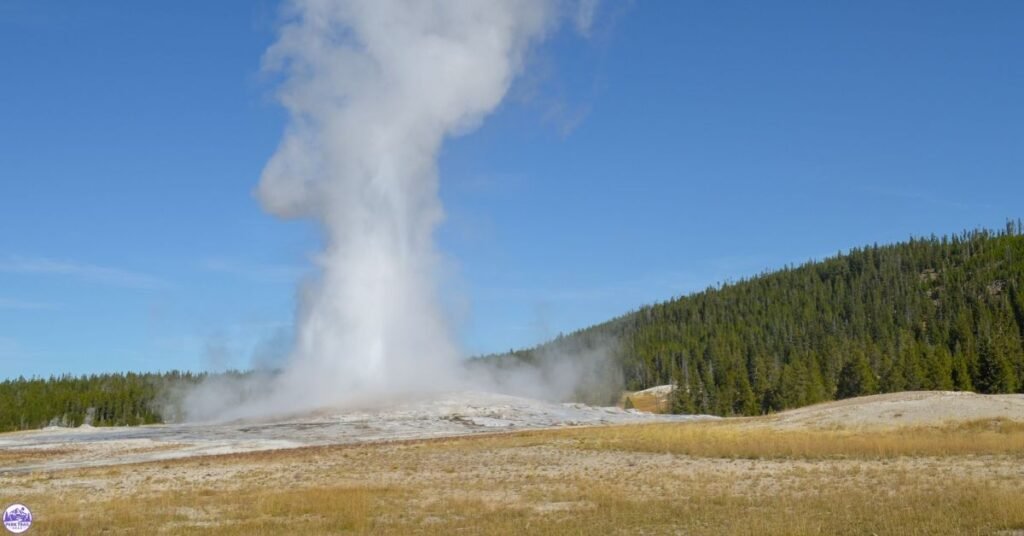
There is no need to guess when the next eruption will happen. Yellowstone provides several ways to check the latest available prediction.
1. Official NPS Current Geyser Activity Page
The NPS Current Geyser Activity page is one of the best places to start. It publishes predicted eruption times for Old Faithful and several other geysers, including Castle, Grand, Daisy, Riverside, and Great Fountain when predictions are available.
Check this page before driving to the Old Faithful area. You can also return to it during your visit to see whether a newer prediction has been posted.
One seasonal detail matters: the NPS says predictions may not be available when the Old Faithful Visitor Education Center is closed. This usually happens from early November to mid-December and again from mid-March to mid-April. The website may continue showing the last prediction until a new one becomes available, so check the accompanying notes rather than assuming an old time is current.
2. Download the Official NPS App
The free National Park Service App is useful for planning a Yellowstone visit. Download the Yellowstone park information and maps before entering the park, because mobile service can be unreliable in many areas.
The app is also listed by the NPS as a source for Old Faithful predictions. Remember that downloaded maps and live information are not the same thing: an offline map may remain available even when a live prediction cannot refresh.
3. Check the Visitor Education Center and Nearby Lodges
When the Old Faithful Visitor Education Center is operating, visitors can check the posted eruption predictions there. The NPS also lists the nearby lodges as places where predictions are displayed.
This is a convenient option if you are already exploring the area and prefer to confirm the latest information in person.
4. Watch the Old Faithful Live Webcam
The official Old Faithful webcam provides a live view of the geyser and the surrounding Upper Geyser Basin.
It is particularly useful when you are planning your visit from another part of Yellowstone or want to see current conditions. However, the webcam should not replace the official prediction. Seeing steam or a quiet viewing area does not tell you exactly when the next eruption will begin.
Planning tip: Use the official prediction as your main reference, and use the webcam as an additional way to see what is happening around the geyser.
How Much Time Should You Allow for an Old Faithful Visit?
The eruption itself is relatively short. According to the NPS, it normally lasts between 1.5 and 5 minutes. The time spent getting to the viewing area, checking predictions, finding parking, and exploring the basin can take much longer.
That is why it helps to think about the entire visit instead of focusing only on the eruption time.
| Part of your visit | What to allow for |
| Driving to Old Faithful | Extra time for road conditions, wildlife jams, and seasonal restrictions |
| Finding parking | Allow a flexible buffer, especially during busy travel periods |
| Walking to the viewing area | Time to follow the designated accessible pathways |
| Finding a viewing position | Aim to arrive around 15–20 minutes before the predicted time |
| Exploring after the eruption | As much additional time as your itinerary allows |
These are planning suggestions, not guaranteed waiting times. Parking availability and traffic can change throughout the day.
For example, suppose the next prediction is listed for 1:00 PM. Do not plan to reach the parking area at 12:50 PM and expect to be standing in the viewing area immediately. You still need to park, walk to the geyser, and find a suitable place to watch.
Once the eruption is over, consider staying in the basin for a while rather than immediately returning to your vehicle. Many visitors leave around the same time, while the nearby boardwalks provide plenty of reasons to continue exploring.
Before setting out, check the NPS Yellowstone road conditions and travel information.
Upper Geyser Basin: What to Explore While You Wait
One of the best reasons to spend time at Old Faithful is that the geyser is only part of the experience.
The surrounding Upper Geyser Basin contains an impressive concentration of geysers and hot springs. Its boardwalk network takes visitors through an active geothermal landscape, with colorful water, mineral deposits, steaming vents, and several named geysers.
Instead of sitting through a long wait, you can use the time to explore some of these nearby features. Just remember to return to the main viewing area before the predicted eruption.
Castle Geyser
Castle Geyser is one of the most recognizable features in the Upper Geyser Basin. Its large, cone-shaped formation gives it a distinctive appearance, even when it is not erupting.
The geyser has a much longer and less frequent interval than Old Faithful, so do not assume it will erupt during a short visit. Check the NPS prediction information when available.
Grand Geyser
Grand Geyser is another interesting feature to look for while exploring the basin. It is one of the geysers for which Yellowstone provides predictions when conditions allow.
Its eruptions can be impressive, but its timing is less frequent than Old Faithful’s. It is best treated as an additional possibility rather than something to fit into a strict short schedule.
Morning Glory Pool
Morning Glory Pool is one of the best-known hot springs in the Old Faithful area. Its colorful appearance makes it a popular destination along the basin’s walking routes.
The pool was named in the 1880s because its shape reminded early visitors of the morning glory flower. Its colors are influenced by heat-loving microorganisms living in the water.
Take your time when viewing the pool, but do not throw coins, stones, or other objects into it. The NPS explains that debris from past vandalism has affected the pool’s circulation and temperature.
Read more about its history on the NPS Morning Glory Pool page.
Anemone Geyser
Anemone Geyser is worth a look if you have limited time and want to watch another small thermal feature in action.
The Anemone group includes Big Anemone and Little Anemone. Big Anemone can fill with water, produce a brief eruption, and then drain again. Little Anemone can follow with a longer eruption.
This activity is quite different from Old Faithful’s larger display. It is a good reminder that Yellowstone’s geysers do not all behave in the same way.
A Simple Way to Plan Your Waiting Time
Your route should depend on how long you have before the next predicted eruption.
| Time remaining | A sensible plan |
| More than 60 minutes | Explore part of the Upper Geyser Basin boardwalk network, while allowing time to return |
| Around 30–60 minutes | Visit a nearby feature and stay within a comfortable distance of the main viewing area |
| Less than 30 minutes | Remain close to Old Faithful and prepare to watch the eruption |
Walking distances and conditions vary, so do not start a longer route when the next prediction is approaching.
Use the official NPS Yellowstone maps to plan your walk.
Crowds, Parking, and the Best Time to Visit Old Faithful
Old Faithful is one of Yellowstone’s most popular attractions, and the viewing area can become busy during the main summer travel season. Parking availability, tour groups, and the number of visitors on the boardwalks can all affect your experience.
Although no time of day guarantees an empty viewing area, early morning and later afternoon are often worth considering.
Early Morning
Arriving early gives you more flexibility before the busiest part of the day. You may also enjoy cooler temperatures and attractive lighting for photographs.
This is a good option if Old Faithful is one of your first stops in Yellowstone and you want time to explore the surrounding basin.
Midday
The middle of the day can be busy, particularly during summer. More visitors are likely to be exploring the main viewing area and nearby walkways.
When visiting around midday, allow extra time for parking and walking. Avoid planning a very tight connection between the predicted eruption and your next stop.
Late Afternoon and Evening
Later in the day can offer a different atmosphere as some visitors continue to other parts of the park. The changing light can also make the surrounding landscape more interesting for photography.
However, do not assume that every tour group has left by a particular hour. Crowd levels vary, and you should also check the operating hours of nearby facilities.
Parking Advice
Use the designated public parking areas around Old Faithful and follow posted signs and ranger instructions. Do not assume that parking reserved for lodge guests or a particular facility is available to everyone.
During busy periods, it is better to allow extra time than to depend on finding a space immediately. Also remember that a wildlife-related traffic delay can affect your driving schedule elsewhere in the park.
For road closures, seasonal access, and changing conditions, check the official NPS conditions page.
Best Places to Watch Old Faithful Erupt
Most visitors watch Old Faithful from its main designated viewing area. This is the easiest choice for a first visit, particularly if you want a clear and convenient place to watch the eruption.
However, there are a few other ways to enjoy the surrounding landscape.
Main Old Faithful Viewing Area
The main viewing area is the most practical option for most visitors. It provides a direct view of the geyser and has designated pathways leading from the nearby parking areas.
Arrive before the predicted time, choose a comfortable viewing position, and follow any instructions posted around the area.
Observation Point Trail
For a broader view of the Upper Geyser Basin, consider the Observation Point Trail.
The NPS describes this as a moderate, 1.6-mile round-trip hike. The route follows switchbacks up a hill to a viewpoint overlooking the basin. The trailhead is reached by walking counter-clockwise along the Old Faithful boardwalk and crossing the Firehole River area toward Geyser Hill.
This is not simply a quick walk behind the viewing benches. It involves an uphill section, so allow enough time and carry water. The NPS recommends pacing yourself on the climb.
The viewpoint provides a wider perspective of the basin, but it is not a replacement for the main viewing area if your priority is watching the eruption from close range.
See the NPS Observation Point Trail details before deciding whether to include it.
Boardwalks Near the Firehole River
The boardwalk network also gives visitors different views of the basin and the Firehole River. Walking along designated paths can be a pleasant way to see the geothermal landscape from another angle.
Stay on the established walkways and follow signs around the geyser features. Never step onto the surrounding mineral ground to find a better photographic position.
Seasonal Guide: When Is the Best Time to Visit the Old Faithful?
Old Faithful can be visited in different seasons, but your experience depends on road access, weather, visitor numbers, and which facilities are operating.
| Season | What to expect | Planning considerations |
| Spring | Cooler weather and visible steam on many mornings | Check road openings, snow conditions, and facility schedules |
| Summer | More visitor activity and generally broader facility availability | Expect busier parking areas and boardwalks |
| Early Autumn | Cooler temperatures and changing scenery | Check for early facility closures and changing weather |
| Late Autumn and Winter | Snow, cold conditions, and more limited services | Confirm road access and winter travel arrangements before visiting |
Spring
Spring can be a beautiful time to see the geyser. Cooler air often makes the steam easier to see, but weather and road conditions can change quickly.
Do not assume that every nearby road or service will be operating when you arrive. Check the current park information before planning a route.
Summer
Summer generally brings the greatest number of visitors to Yellowstone. Longer daylight hours make it easier to explore the Upper Geyser Basin, but you may encounter more traffic and competition for parking.
Carry water, wear comfortable footwear, and protect yourself from the sun.
Autumn
Early autumn can be an appealing time to visit because temperatures begin to fall and the landscape changes color. Cooler air can also make the steam rising from Old Faithful more noticeable.
As the season progresses, some facilities begin closing. Check their operating dates rather than assuming that summer services remain available.
Winter
Winter visits require more preparation. Many park roads are closed to regular vehicles or switch to oversnow travel, and services around Yellowstone become limited.
The Old Faithful Visitor Education Center also has seasonal closures, which can affect the availability of new geyser predictions. The NPS generally lists a closure period in early November to mid-December and another in mid-March to mid-April.
Check the latest Yellowstone operating dates and road conditions before travelling.
What to Bring for Your Upper Geyser Basin Walk
Even a short visit to Old Faithful can involve more walking than expected. You may spend time on paved paths and wooden boardwalks before and after the eruption, so a little preparation makes the experience more comfortable.
| Item | Why it helps |
| Comfortable walking shoes | Useful for boardwalks and longer walks around the basin |
| Refillable water bottle | Helps you stay hydrated during your visit |
| Sunscreen and sunglasses | Protect your skin and eyes from sun exposure |
| Hat | Provides extra shade during sunny weather |
| Light jacket or rain shell | Useful when temperatures or weather change |
| Camera or phone | Helps capture the eruption and surrounding thermal features |
| Offline park map | Makes navigation easier when mobile service is unreliable |
The weather in Yellowstone can change quickly. Even if the morning starts sunny, bring a layer that can protect you from wind or rain.
Also, remember that the Upper Geyser Basin is a geothermal area, not an ordinary walking trail. Stay on designated paths, keep children close, and never touch the hot water or runoff.
Accessibility at Old Faithful
Visitors with mobility concerns should not assume that the entire Upper Geyser Basin has the same trail conditions.
The NPS confirms that accessible walkways lead from the Old Faithful parking areas to the geyser and from the visitor center toward other hydrothermal features. This makes the main viewing area a practical option for many visitors using wheelchairs or other mobility aids.
However, the routes beyond the central viewing area can vary. Longer walks and elevated trails, including Observation Point, are not suitable substitutes for the accessible central route.
The NPS also notes that manual wheelchairs can be borrowed at visitor centers and lodging facilities in the Old Faithful area while available.
Before your visit, check the latest NPS Yellowstone accessibility information. Conditions and available services can change with the season.
When Another Yellowstone Thermal Area Might Be a Better Choice
Old Faithful deserves a place on many Yellowstone itineraries, but it does not have to be the only geothermal stop you visit.
If you have already watched an eruption or have limited time, consider exploring another area.
Midway Geyser Basin and Grand Prismatic Spring
Midway Geyser Basin is home to Grand Prismatic Spring, one of Yellowstone’s most recognizable hot springs. Its brilliant colors create a very different experience from watching a geyser erupt.
The basin is north of Old Faithful along the main park road. According to the NPS accessibility information, Grand Prismatic has accessible parking and a boardwalk.
Norris Geyser Basin
Norris Geyser Basin offers a different geothermal landscape, with a range of hot springs, geysers, and steaming features. It is a useful choice for visitors interested in seeing more of Yellowstone’s active thermal areas.
Conditions, trail access, and the availability of individual features can change, so check current park information.
West Thumb Geyser Basin
West Thumb is located beside Yellowstone Lake. Its boardwalks provide a different setting, combining thermal features with views of the lake.
It is worth considering when your itinerary includes the southern part of Yellowstone.
You can compare these areas using the official Yellowstone maps and visitor information.
Common Mistakes to Avoid When Watching Old Faithful
A few simple mistakes can make your visit more stressful than it needs to be.
Arriving at the exact predicted minute: The prediction is an estimate. Walking to the viewing area at the listed time could mean arriving after the eruption has already started.
Assuming the geyser erupts every hour or every 90 minutes: Its interval changes. Check the latest prediction instead of following a fixed timetable.
Starting a long walk just before the eruption: Always consider how long it will take to return. A trail that looks close on a map can take longer than expected.
Leaving immediately after the eruption: You do not need to rush straight back to the car. Exploring nearby boardwalks can help you avoid the busiest moment around the parking area.
Stepping off the boardwalk: The ground around thermal features can be a thin crust over extremely hot water. Stay on designated paths at all times.
Getting too close to wildlife: Yellowstone’s wildlife is unpredictable. Stay at least 25 yards from bison and elk, and at least 100 yards from bears, wolves, and cougars.
Ignoring seasonal closures: Road access and visitor services change throughout the year. Check operating dates and current conditions before you travel.
For additional information, read the NPS Yellowstone safety guidelines.
Frequently Asked Questions About Old Faithful Eruption Times
How often does Old Faithful erupt?
Old Faithful commonly erupts about once every 90 to 110 minutes, but the interval can be shorter or longer. NPS data lists a median interval of approximately 102 minutes, with recorded intervals ranging from 54 to 118 minutes in its published information. Always check the latest prediction rather than relying on an average.
How accurate are Old Faithful eruption predictions?
Old Faithful is more predictable than most geysers, but its eruption time is not guaranteed to the exact minute. The NPS explains that predictions are based partly on the previous eruption’s duration. A 2026 USGS article reports that more precise measurements helped keep predictions within roughly 12 minutes during that season.
What time will Old Faithful erupt today?
There is no permanent daily timetable. The next prediction changes as new eruption observations become available. Check the official NPS Current Geyser Activity page for the latest available information.
How long does an Old Faithful eruption last?
An eruption generally lasts between 1.5 and 5 minutes. That short display is one reason visitors should reach the viewing area before the predicted time.
How high does Old Faithful erupt?
The NPS lists a historical height range of approximately 106 to more than 180 feet, with an average near 130 feet. The height varies from one eruption to another.
How much water comes out of Old Faithful?
According to the NPS, an eruption can expel approximately 3,700 to 8,400 gallons of water. The actual amount varies between eruptions.
Can I watch Old Faithful erupt without walking far?
Yes. Accessible walkways lead from the Old Faithful parking areas to the geyser viewing area. The central viewing location is the most practical choice for visitors who do not want to explore the longer boardwalk routes.
Is there an Old Faithful live webcam?
Yes. Yellowstone provides an official live webcam showing Old Faithful and the surrounding Upper Geyser Basin. Visit the NPS Old Faithful page to find the live view.
Are Old Faithful predictions available in winter?
Predictions may not be available when the Old Faithful Visitor Education Center is closed. The NPS lists typical closure periods in early November to mid-December and mid-March to mid-April. Check the current geyser activity page and its notes before relying on an older prediction.
Is the Old Faithful viewing area wheelchair accessible?
The NPS confirms that accessible walkways connect the parking areas with Old Faithful Geyser. However, the longer trails and some routes through the basin have different surfaces and elevation changes. Check the official accessibility information before choosing a walking route.
Conclusion
Watching Old Faithful erupt is one of the classic Yellowstone experiences, but the best visit involves more than arriving at the predicted minute. The geyser does not run on an exact hourly schedule, and its next eruption depends partly on the duration of the previous one.
Before leaving for the area, check the official NPS prediction, allow enough time for parking and walking, and reach the viewing area ahead of the estimated eruption. If you have a longer wait, use it to explore the Upper Geyser Basin, visit Morning Glory Pool, or walk part of the nearby boardwalk network.
Most importantly, keep your plans flexible. Road conditions, weather, crowds, and geyser activity can all change. With realistic expectations and a little preparation, you can enjoy Old Faithful without spending your entire Yellowstone visit waiting for one eruption.
Author Bio
Awais is the Founder and Editorial Director of ParkTrailsGuide. Working with a network of outdoor contributors and current park data, he creates deeply researched survival guides, packing frameworks, and safety blueprints for U.S. national parks. His mission is to turn complex official National Park Service data into clear, actionable travel resources.
1 thought on “Old Faithful Eruption Times: How to Check Predictions and Explore Upper Geyser Basin”