

Finding a campground in Yellowstone National Park that works in every season can be difficult. Many of the park’s campgrounds close during fall, but Mammoth Campground offers something different: it remains open throughout the year.
Located about five miles south of Yellowstone’s North Entrance near Gardiner, Montana, Mammoth Campground is a convenient base for exploring the northern part of the park. You can visit Mammoth Hot Springs, hike nearby trails, explore the northern road corridor, and look for wildlife around Lamar Valley.
Planning to explore more of the park during your stay? Our guide to the best Yellowstone park activities covers geyser basins, canyon viewpoints, wildlife areas, and scenic stops worth considering beyond Mammoth.
The campground is relatively simple. You won’t find RV hookups or showers, and many campsites have limited shade. However, its location, year-round availability, and comparatively low nightly rate make it an appealing option for tent campers, campervan travelers, and people with smaller RVs.
This guide explains what to expect at Mammoth Campground, when to reserve a site, how much camping costs, which RV sizes fit, and what changes during winter.
Quick Facts About Mammoth Campground
| Feature | What to know |
| Location | Mammoth Hot Springs area, Yellowstone National Park |
| Distance from North Entrance | About 5 miles |
| Number of campsites | 82 on Recreation.gov |
| Operating season | Open year-round |
| Nightly campsite fee | $25, before any applicable checkout charges |
| Reservations | Required during the summer reservation season |
| Winter camping | First-come, first-served |
| Electricity | No hookups |
| Showers | Not available |
| Toilets | Flush toilets listed year-round |
| Potable water | Available at campground spigots |
| Maximum winter RV length | 30 feet |
| Maximum summer RV and vehicle length | 45 feet |
For the latest information, check the NPS Yellowstone camping page and the Mammoth Campground listing on Recreation.gov.
Why Choose Mammoth Campground in Yellowstone?
Mammoth Campground’s biggest advantage is its location. It is the only campground in Yellowstone that stays open year-round, making it particularly useful for visitors planning a late-fall, winter, or early-spring trip.
The campground sits in a high sagebrush landscape with scattered juniper and Douglas fir trees. Some areas receive shade during summer, but this is not the heavily wooded camping environment you might expect in other parts of Yellowstone.
Its northern location also makes it practical for exploring several nearby attractions.
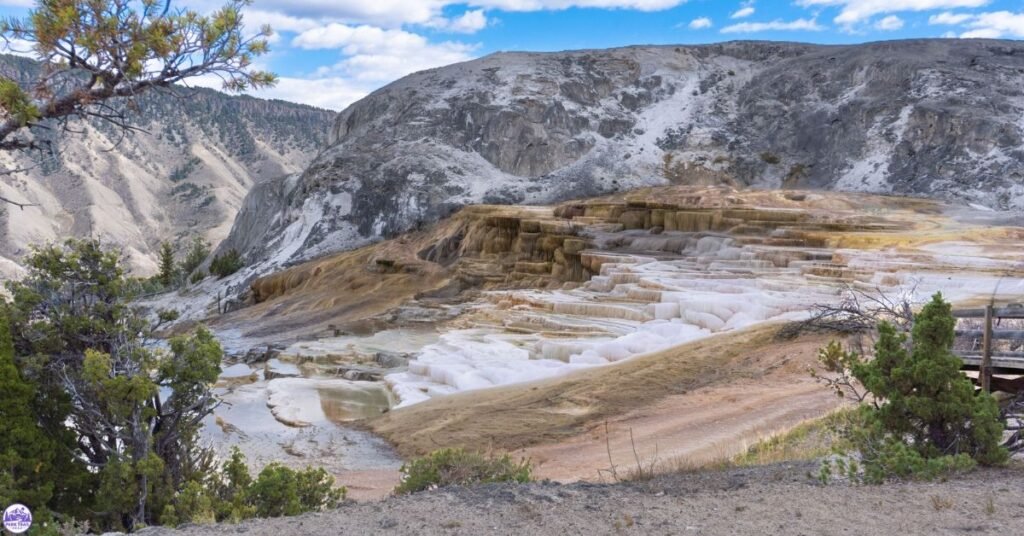
Mammoth Hot Springs is close to the campground, so you don’t need to spend much time driving before walking the terraces. The Beaver Ponds Trail also starts within the Mammoth Hot Springs developed area.
For a longer outing, Bunsen Peak offers a mountain hike approximately five miles south of Mammoth. You can also drive toward Tower Junction and Lamar Valley to look for bison, elk, wolves, and other wildlife.
Winter visitors have another advantage. The road connecting the North Entrance near Gardiner to the Northeast Entrance near Cooke City is generally open to regular vehicles throughout the year. That provides access to part of Yellowstone’s northern range even when many other park roads are closed.
However, always check the official Yellowstone road status before driving. Weather, snow, and temporary closures can change travel plans.
Mammoth is not the right campground for every traveler. It has basic facilities rather than full-service RV amenities. But for visitors who prioritize location and year-round access, it offers a practical starting point.
Mammoth Campground Sites, Loops, and Layout
Recreation.gov lists 82 campsites at Mammoth Campground. The available site descriptions include Loop A, Loop B, and a separate tent loop.
The campground offers non-electric sites, so you should not expect electrical connections at your campsite. RV travelers need to plan for an independent power and water setup.
The different loops can help you narrow down your search:
| Camping preference | Where to start looking |
| Tent camping | Tent loop |
| RVs and campervans | Loop A and Loop B |
| Travelers comparing individual sites | Recreation.gov site listings and photos |
Every site allows a maximum of six people. Vehicles, motorcycles, and trailers must remain on designated parking pads or established roadways. Keep that restriction in mind when traveling with more than one vehicle.
Before booking, open the Mammoth Campground page on Recreation.gov and review the individual site descriptions and photographs.
A campsite photograph can help you understand the parking arrangement, available space, slope, and surrounding vegetation. It is worth comparing several sites instead of selecting the first available option.
One detail deserves attention: the Recreation.gov listing and the NPS camping table show 82 campsites, while a separate NPS campground page currently displays 85. Use the live Recreation.gov inventory and map when choosing a specific site.
Mammoth Campground Reservations: When to Book
Reservation rules change depending on the season.
During the main summer camping season, reservations are required. Recreation.gov lists April 15 as the start of the reservation period.
For winter camping, the Recreation.gov notice currently identifies October 16 through April 16 as the first-come, first-served period. During this time, visitors choose from available campsites after arriving rather than booking a normal advance reservation.
The official information does not describe every seasonal transition date in exactly the same way. For that reason, check your specific arrival date in the live Recreation.gov calendar before making travel arrangements.
How to reserve a campsite
- Visit Recreation.gov.
- Enter your planned camping dates.
- Review the available campsites.
- Compare site descriptions and photographs.
- Select a suitable campsite and complete the booking.
Yellowstone’s camping information says reservations for the 2027 summer season are being handled through Recreation.gov, with reservations opening approximately six months ahead.
Summer dates can become difficult to find as popular travel periods approach. Booking when your reservation window opens gives you more options.
How winter first-come, first-served camping works
Winter visitors should download the Recreation.gov app before arriving.
According to the campground’s current notice, winter sites are paid for using the app’s Scan and Pay system. This is the payment method listed for the first-come, first-served period.
Cell phone reception is available in some parts of the campground, but it is sensible to install the app, sign in, and prepare your account before leaving Gardiner.
For questions about late arrivals or reservations, the campground contact number listed by Recreation.gov is 307-344-2289.
How Much Does Mammoth Campground Cost?
Mammoth Campground has a published nightly campsite fee of $25.
That is a useful price point for visitors who want to camp inside Yellowstone without paying the higher rates charged at some concession-operated campgrounds.
For example, a four-night stay at the published $25 rate would cost $100 in campsite fees before any applicable taxes or booking charges.
Remember that the campground fee and the park entrance fee are separate expenses.
Yellowstone entrance fees
The current NPS fee information lists the following options:
| Entrance pass | Published price |
| Private vehicle pass | $35 |
| Yellowstone annual pass | $70 |
| America the Beautiful resident annual pass | $80 |
The private vehicle pass covers the vehicle and its passengers for seven consecutive days.
Yellowstone also has a nonresident fee policy. Visitors who are not U.S. residents and are age 16 or older may be subject to an additional $100 per-person fee unless they enter using an eligible annual or America the Beautiful pass. Review the official NPS nonresident fee information before calculating your total trip budget.
Vehicle reservations are not required to enter Yellowstone, but visitors do need a valid entrance pass.
Cancellation and change fees
Recreation.gov also lists fees for certain reservation changes and cancellations.
- Changing to entirely new dates outside the original reservation dates can incur a $10 change fee.
- Cancelling before arrival generally results in a $10 service fee being withheld from the refund.
- Cancelling the day before or on the arrival date can result in a $10 service fee plus forfeiture of the first night’s rate.
- A no-show can result in a $20 service fee plus forfeiture of the first night’s rate.
Check the current Recreation.gov cancellation policy before booking, because the applicable charges depend on the circumstances.
RVs and Campervans: What Fits at Mammoth?
Mammoth Campground accommodates RVs, trailers, and campervans, but the maximum length changes with the season.
According to the NPS camping table:
- From mid-October through April, the winter maximum is 30 feet.
- From May through mid-October, the maximum combined RV and vehicle length is 45 feet.
Recreation.gov also lists a 30-foot RV limit from November through April.
If your vehicle and RV combination is close to the limit, check the individual campsite details instead of assuming that every site can accommodate the same setup.
Are there RV hookups?
No. Mammoth Campground does not offer electric, water, or sewer hookups.
There is also no dump station listed for this campground. Potable water spigots are available, but they are not intended for washing dishes or clothes.
If you travel in an RV, plan your water supply and waste disposal before arriving. Do not assume that services available at another Yellowstone campground will also be available at Mammoth.
Generator and quiet-hour rules
Generators are subject to specific operating hours.
Recreation.gov lists the following rules:
| Rule | Time |
| Quiet hours | 10 p.m. to 6 a.m. |
| Generator restrictions | 8 p.m. to 8 a.m. |
Generators must also be turned off during the day when the campsite is not occupied by the registered renter.
Out-of-park RV or camper-unit delivery and pickup are prohibited. Plan your rental vehicle arrangements before arriving at the park.
Winter Camping at Mammoth: What Changes?
Winter camping at Mammoth is very different from a summer visit.
Snow, freezing temperatures, and limited daylight affect how you prepare and how much time you should spend outside. Recreation.gov describes typical winter daytime temperatures in the 0–20°F range, with subzero temperatures possible overnight.
That makes suitable clothing, sleeping equipment, and a reliable heating plan essential.
Prepare for snow and freezing nights
Campground roads are plowed, but snow conditions can still affect individual parking areas and campsite access. A shovel and winter-ready vehicle equipment are useful additions to your packing list.
Check the weather forecast shortly before your trip and bring more cold-weather protection than you think you will need.
Understand the winter facilities
Recreation.gov lists flush toilets as available year-round. However, visitors should not assume that every campground facility operates in the same way throughout the winter.
There are no showers or RV hookups, so plan accordingly.
Download Recreation.gov before arriving
The winter first-come, first-served process uses the Recreation.gov app’s Scan and Pay feature.
Download the app and sign in while you still have a reliable internet connection. That small preparation can prevent unnecessary problems after reaching the campground.
Winter sightseeing near Mammoth
Although access can be different from summer, Mammoth Hot Springs continues to be a major attraction during winter.
The NPS notes that most Mammoth boardwalks are not maintained during winter. Visitors can explore the Upper Terraces on skis or snowshoes when conditions allow.
Mammoth is also a good base for exploring the northern road corridor, depending on the current road conditions.
Before driving or hiking, check the NPS current conditions page.
Wildlife and Campground Safety
Wildlife is part of the Mammoth experience. Elk and other animals sometimes move through the Mammoth Hot Springs area, and visitors may encounter wildlife near roads, trails, or campground facilities.
However, animals in Yellowstone are wild. Even an animal that appears calm can become dangerous when approached.
The NPS recommends keeping at least:
- 25 yards from elk, bison, and most other wildlife.
- 100 yards from bears, wolves, and cougars.
If an animal comes closer, move away rather than trying to get a better photograph. The safest way to view wildlife is often from inside your vehicle.
Elk deserve particular attention around Mammoth. Female elk can aggressively protect calves during spring, while bull elk can become unpredictable during the fall rut.
Store food properly
Yellowstone has strict food-storage rules because wildlife can associate human food with campsites and vehicles.
Keep food and related items secured in your vehicle or an approved food storage locker when they are not being used.
This includes:
- Coolers and ice chests
- Food and beverages
- Cooking equipment and utensils
- Stoves
- Pet food
- Food and beverage containers
Use the campground’s bear-resistant trash cans. Do not leave food waste or garbage unattended.
Keep the campground clean
Washing dishes or clothes at campground water spigots is prohibited. Carry wastewater to a restroom toilet for disposal as directed by the campground rules.
Campfires are allowed only in established fire grates. Follow current fire restrictions and make sure every fire is completely extinguished before leaving it.
Read the official Yellowstone wildlife and safety guidance before your visit.
Beaver Ponds Loop: A Nearby Hike From Mammoth
The Beaver Ponds Trail is one of the more convenient hiking options near Mammoth Campground.
This moderately strenuous loop covers approximately five miles and gains more than 350 feet in elevation. The NPS estimates a hiking time of two to five hours.
The route passes through sagebrush meadows and wooded areas. The ponds are roughly halfway around the loop, although seeing beavers is not guaranteed. Muskrats and water birds may be easier to spot.
Both trailheads are in the developed Mammoth Hot Springs area. One is near Liberty Cap and the stone house, while the other is behind Mammoth Hot Springs Hotel.
There is more to consider than distance alone. The trail has rocky sections, narrow wooden bridges, and some steep grades. Grizzly and black bears frequent the area, so check current trail conditions and follow Yellowstone’s bear-safety guidance.
Dogs are not allowed on this trail.
The NPS lists the trail as open year-round, but that does not mean every day will offer suitable hiking conditions. Snow, ice, and wildlife activity can affect your plans.
For current information, see the official Beaver Ponds Trail guide.
Bunsen Peak Trail: A More Challenging Hike
If you want a more demanding hike, consider Bunsen Peak.
The trail is approximately 4.6 miles round trip and climbs around 1,300 feet through forest and meadow. The National Park Service estimates a hiking time of two to three hours.
From the summit, hikers can look across Swan Lake Flat, the Gallatin Range, Blacktail Deer Plateau, and the Yellowstone River Valley.
The trailhead is about five miles south of Mammoth along the Grand Loop Road. Parking is in a relatively small gravel lot just south of Golden Gate, across from the Glen Creek trailhead.
Arrive early during summer when parking demand is higher. Allow extra time for photographs, breaks, and changing mountain weather.
Bunsen Peak is listed by NPS as a summer and fall hike. Grizzly bears frequent the area, so be prepared for bear country.
Dogs are not allowed on the trail.
Check the official Bunsen Peak Trail page before setting out.
Mammoth Hot Springs Terraces: The Easiest Nearby Attraction
You do not have to plan a long hike to enjoy the Mammoth area.
Mammoth Hot Springs is known for its travertine terraces, which form as mineral-rich hot water reaches the surface and deposits calcium carbonate.
A network of boardwalks and designated walking routes allows visitors to view these changing thermal features.
The NPS estimates that exploring the terraces can take approximately 30 to 90 minutes, depending on the route you choose.
The walk between the Lower and Upper Terraces includes steep boardwalks and several hundred stairs. It can be strenuous, so take the route’s elevation changes into account when planning your visit.
Thermal areas also require care. Stay on boardwalks and designated trails. The ground outside these areas can be dangerously thin over superheated water, and the thermal features can cause severe burns.
During winter, most boardwalks are not maintained. The Upper Terraces may offer a skiing or snowshoeing alternative when conditions permit.
For trail details and seasonal guidance, visit the NPS Mammoth Hot Springs Trails page.
A Practical Three-Day Plan From Mammoth Campground
A little planning can help you enjoy the northern part of Yellowstone without spending every day driving from one attraction to another.
Here is a flexible three-day outline.
Day 1: Arrive and explore Mammoth
Set up your campsite, organize food storage, and familiarize yourself with the campground.
Spend the afternoon exploring Mammoth Hot Springs. The terraces are relatively close, and the walk can be adjusted to fit your available time and energy.
You can also visit the Albright Visitor Center to get current information about nearby roads, trails, and wildlife activity.
Day 2: Choose a hike
During summer or fall, consider hiking Bunsen Peak. Start early to improve your chances of finding parking and leave enough time for the climb.
Another option is Beaver Ponds Loop, which provides a different landscape and a longer walk through meadows and wooded areas.
Check trail and bear conditions before choosing either hike.
During winter, consider a suitable Upper Terraces ski or snowshoe outing instead. Do not assume summer boardwalk access will be available.
Day 3: Explore the northern range
Use your final day to explore the northern road corridor toward Tower Junction and Lamar Valley.
This area is popular for wildlife viewing, but sightings are never guaranteed. Drive slowly, use designated pullouts, and keep the required distance from animals.
In winter, check the road status before leaving Mammoth. Snow and changing conditions may affect your route.
This itinerary is a starting point rather than a fixed schedule. Adjust each day to current road conditions, weather, and the experience of everyone in your group.
Common Mammoth Campground Mistakes to Avoid
A little preparation can prevent several common camping problems.
Assuming every campsite is first-come, first-served: Summer reservations are required. Check the booking calendar before traveling.
Arriving for winter camping without the app: Recreation.gov uses Scan and Pay for first-come, first-served winter sites.
Bringing an RV that exceeds the seasonal limit: The winter limit is 30 feet. Check the combined vehicle and RV restrictions for your particular setup.
Expecting showers or full hookups: Mammoth is a basic campground. There are no showers or RV hookups.
Leaving food outside: Food and related items need to be secured when not in immediate use.
Approaching elk or bison: These animals can injure visitors. Follow the official wildlife-distance rules.
Planning a winter visit without checking road conditions: Winter access is possible, but weather can change the status of roads and trails.
Where to Stay if Mammoth Campground Is Full
Mammoth is not the only accommodation option in the northern Yellowstone area.
The Mammoth Hot Springs Hotel and Cabins provides an alternative within the Mammoth area. Confirm the property’s seasonal operating dates and availability before arranging your trip.
Gardiner, Montana, is another practical option. It is located just outside Yellowstone’s North Entrance and offers access to lodging and supplies.
Indian Creek Campground is another nearby campground to consider during its operating season. However, the NPS has listed its 2027 operating dates as to be determined, so check the current campground schedule before relying on it.
If you prefer another campground inside the park, compare its opening dates, facilities, and location with your intended activities. Not every Yellowstone campground is open during winter.
Frequently Asked Questions
Is Mammoth Campground open year-round?
Yes. Mammoth Campground is the only campground in Yellowstone National Park listed by NPS as open throughout the year. Reservation and payment arrangements change with the season.
How far is Mammoth Campground from Gardiner, Montana?
The campground is approximately five miles south of Yellowstone’s North Entrance near Gardiner. The entrance road follows the Gardner River canyon, and wildlife or weather can affect driving time.
Can a 30-foot RV stay at Mammoth Campground?
The published winter limit is 30 feet, while the NPS camping table lists a 45-foot combined RV-and-vehicle limit during the warmer season. Check the individual site restrictions before booking.
Does Mammoth Campground have showers?
No. Recreation.gov lists no showers at Mammoth Campground. Visitors should plan to use other facilities if showers are important to their trip.
Are there RV hookups at Mammoth Campground?
No. There are no electric, water, or sewer hookups. Potable water spigots are available, but RV travelers need to plan independently for power and wastewater.
Can you camp at Mammoth without a reservation?
Yes, during the first-come, first-served winter period identified by Recreation.gov. The current notice lists October 16 through April 16. Download the Recreation.gov app in advance because winter payment uses Scan and Pay.
Can you see wildlife near Mammoth Campground?
Wildlife such as elk and bison can be found in the Mammoth area, although sightings are never guaranteed. Keep at least 25 yards from elk and bison and 100 yards from bears, wolves, and cougars.
Is Mammoth Campground a good base for Lamar Valley?
It is a useful base for exploring the northern part of Yellowstone, including the route toward Lamar Valley. Travel time depends on road conditions, wildlife-related traffic, and seasonal access.
Final Thoughts: Is Mammoth Campground Worth Booking?
Mammoth Campground is worth considering if you want a simple camping base in Yellowstone’s northern section.
Its year-round operation makes it especially useful for visitors planning trips outside the main summer season. The nearby terraces, Beaver Ponds Trail, Bunsen Peak, and northern wildlife-viewing areas also provide plenty of ways to spend your time.
The trade-off is its limited facilities. There are no showers or RV hookups, the campsites are relatively exposed, and winter camping requires proper preparation.
For tent campers, campervan travelers, and visitors with smaller RVs who are comfortable with basic facilities, Mammoth can be a practical choice.
Reserve your summer site early, prepare the Recreation.gov app for a winter visit, and keep checking official road and weather updates as your trip approaches.
For the most reliable planning information, start with the NPS Yellowstone camping guide and the official Mammoth Campground listing.
Author Bio
Awais is the Founder and Editorial Director of ParkTrailsGuide. Working with a network of outdoor contributors and current park data, he creates deeply researched survival guides, packing frameworks, and safety blueprints for U.S. national parks. His mission is to turn complex official National Park Service data into clear, actionable travel resources.
1 thought on “Mammoth Campground Yellowstone: Reservations, Fees, Sites, and Winter Camping Guide”