

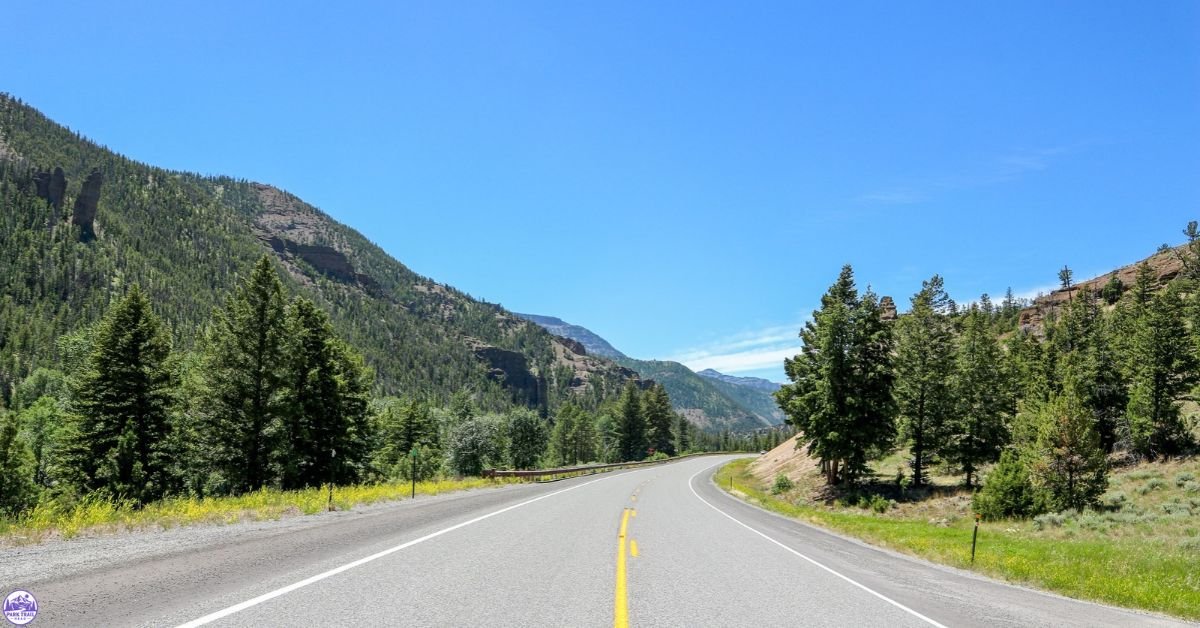
Driving through Yellowstone National Park is not as simple as following a map from one attraction to another. The park covers a huge area, roads wind through mountains and valleys, and wildlife can bring traffic to a standstill without warning.
The 142-mile Grand Loop Road connects many of Yellowstone’s best-known attractions, including Old Faithful, Grand Prismatic Spring, Yellowstone Lake, the Grand Canyon of the Yellowstone and Mammoth Hot Springs. Beyond the main loop, Lamar Valley offers excellent opportunities for wildlife watching, while the Beartooth Highway adds one of the most memorable mountain drives in the region.
The trick is giving yourself enough time to enjoy the journey rather than rushing between stops.
Before settling on your route, explore our guide to the 12 best Yellowstone park activities to compare the park’s most popular geysers, waterfalls, wildlife areas, and scenic experiences.
In this guide, we explain how to plan the Lower Loop, Upper Loop, Lamar Valley and Beartooth Highway. You’ll also find realistic driving estimates, seasonal road restrictions, construction information, fuel locations and important safety rules.
Quick Answer: For a first Yellowstone road trip, allow two to three days. Spend your first day exploring the Lower Loop, then use your second day for the Upper Loop, Canyon area and Lamar Valley. Add the Beartooth Highway on a third day if you’re visiting during its seasonal opening period and plan to leave through Yellowstone’s Northeast Entrance. Start wildlife drives around sunrise, allow extra time for traffic and check the official road conditions before setting out.
How to Plan a Yellowstone Drive
Yellowstone’s Grand Loop Road forms a figure-eight shape through the park. It connects several major visitor areas and provides access to most of the attractions people want to see on their first visit.
The route has three commonly used distance measurements:
- Grand Loop: 142 miles.
- Upper Loop: 70 miles.
- Lower Loop: 96 miles.
These loops share sections of the road, so their distances should not be added together to calculate the full route.
Yellowstone’s posted speed limit is generally 45 mph unless a lower limit is displayed. However, curves, steep grades, construction, wildlife and roadside viewing areas often make actual travel slower. A bison herd crossing the road can turn a short drive into a lengthy wait.
This is why planning around time is more useful than simply measuring mileage.
The official Yellowstone park map is a helpful starting point. Download a copy before entering the park so you have a reference even when mobile service disappears.
Yellowstone Driving Times: What to Expect
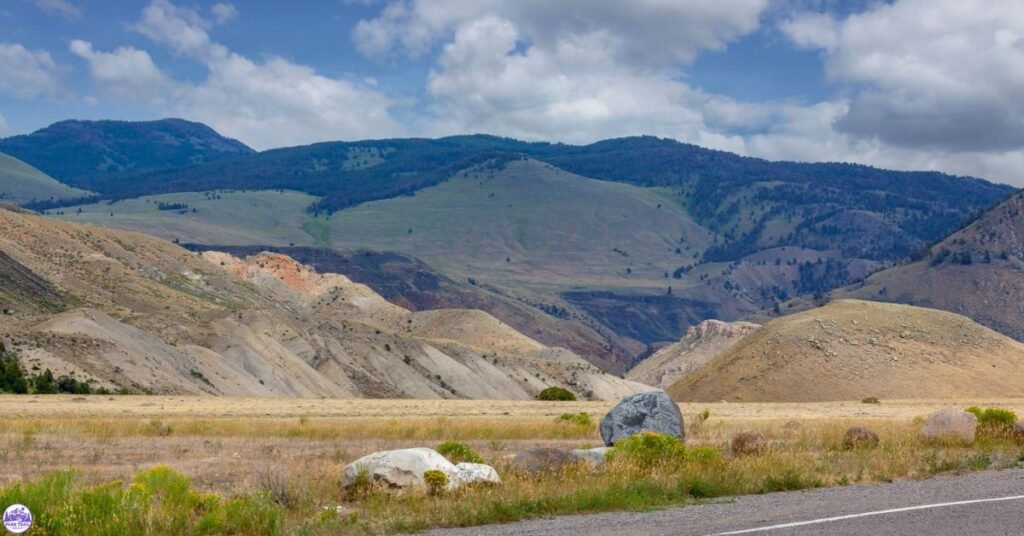
Yellowstone National Park Lodges publishes a road-distance map with estimated driving times for the major loops. According to that map, the full Grand Loop takes approximately six hours without sightseeing stops.
The Lower Loop takes around four hours and 15 minutes, while the Upper Loop takes approximately two hours and 45 minutes.
These are planning estimates, not guaranteed travel times. Road construction, weather and wildlife can make the journey considerably longer.
| Yellowstone route | Distance | Published driving estimate | Time to allow for sightseeing |
| Lower Loop | 96 miles | About 4 hours 15 minutes | One full day |
| Upper Loop | 70 miles | About 2 hours 45 minutes | Most of a day |
| Grand Loop | 142 miles | About 6 hours | Two days recommended |
| Lamar Valley drive | Depends on starting point | About 1 hour each way from Tower Junction to the Northeast Entrance | Half a day or longer |
| Beartooth Highway | 68.7 miles | About 2 hours to drive | Around 3 hours to experience the byway |
The Beartooth Highway estimate comes from the Federal Highway Administration’s America’s Byways information. The other loop estimates come from Yellowstone National Park Lodges’ published road map.
The National Park Service also provides average driving times for individual road sections on its Directions and Transportation page.
One practical rule makes a big difference: don’t fill every hour with planned stops. Yellowstone is a wildlife habitat, not an ordinary highway system. Leave room for unexpected delays and spontaneous viewing opportunities.
Which Yellowstone Drive Should You Choose?
Each route offers something different. The best choice depends on how much time you have and what you most want to experience.
| Driving route | Best for | Consider skipping when |
| Lower Loop | First-time visitors, geysers, Yellowstone Lake and canyon scenery | You have less than a full day |
| Upper Loop | Mammoth Hot Springs, Tower Fall and mountain scenery | Seasonal road closures affect your route |
| Lamar Valley | Bison, wolves, bears and other wildlife | You cannot visit around sunrise or have very limited time |
| Beartooth Highway | Alpine scenery, mountain views and a scenic departure | You have only two days or would need to double back |
For most first-time visitors, the Lower Loop deserves priority. It brings together several of Yellowstone’s most recognizable landscapes.
However, don’t overlook Lamar Valley. If wildlife watching is one of your main reasons for visiting, an early morning drive there may become the highlight of your entire trip.
The Lower Loop: The Best Starting Point for First-Time Visitors
The Lower Loop is a natural starting point because it connects Yellowstone’s famous geothermal attractions with its lake and canyon scenery.
At approximately 96 miles, the route passes through areas such as Madison, Old Faithful, West Thumb, Yellowstone Lake, Hayden Valley, Canyon Village and Norris.
You can spend an entire day exploring this section without feeling the need to rush.
Old Faithful and the Upper Geyser Basin
Old Faithful is one of Yellowstone’s most recognizable attractions. Visitors gather around the geyser to watch its periodic eruptions, which makes it a popular first stop on a Lower Loop drive.
Don’t plan your entire day around a specific eruption time. Predictions can change, and the surrounding Upper Geyser Basin has plenty to explore while you wait.
Allow additional time for parking, walking the boardwalks and visiting nearby geothermal features.
Grand Prismatic Spring
Grand Prismatic Spring is another major reason to explore the Lower Loop.
Its colorful mineral rings make it one of the park’s most recognizable geothermal features. For a different perspective, consider walking to the Grand Prismatic Overlook.
The overlook trail begins at the Fairy Falls Trailhead and climbs approximately 105 feet over 0.6 miles. The complete round-trip walk is 1.2 miles.
Parking at the trailhead is very limited, especially during busy summer periods. Arriving early can make it easier to find a space.
Check the National Park Service Grand Prismatic Overlook Trail guide before visiting for current trail information.
West Thumb and Yellowstone Lake
Continue toward West Thumb Geyser Basin and Yellowstone Lake.
West Thumb offers geothermal features beside the lake, making it a worthwhile stop even when you have already visited other geyser basins.
Yellowstone Lake also provides a different atmosphere from the park’s busy geothermal areas. Its surrounding landscape is a good opportunity to slow down and enjoy the scenery.
The lake area is particularly worth including when you want a varied driving day rather than spending every stop around geysers.
Hayden Valley
Hayden Valley is one of the best-known wildlife-viewing areas along the Lower Loop.
Bison are commonly seen in this part of Yellowstone, and visitors may also encounter elk, bears and wolves. However, wildlife sightings are never guaranteed.
Early mornings and evenings are popular times for wildlife watching. Use designated pullouts rather than stopping in the travel lane.
Keep binoculars in the vehicle so you can observe distant animals without approaching them.
Lower Loop planning tip: Avoid trying to explore every geothermal basin in detail on the same day. Choose the stops that interest you most, allow time for short walks and keep your schedule flexible.
The Upper Loop: Mammoth Hot Springs, Tower Fall and Dunraven Pass
The Upper Loop offers a different experience from the geothermal landscapes of the Lower Loop.
Its main attractions include Mammoth Hot Springs, Norris Geyser Basin, Tower Fall and the mountain scenery around Dunraven Pass.
This route is particularly appealing to visitors who want to experience more of Yellowstone’s northern landscapes.
Mammoth Hot Springs
Mammoth Hot Springs is known for its terraces formed by mineral-rich hot water.
Unlike the colorful pools at Grand Prismatic Spring, Mammoth’s terraces feature distinctive formations and changing patterns of mineral deposits.
The area has boardwalks that allow visitors to explore the formations while protecting the fragile geothermal environment.
Allow enough time to walk around the terraces rather than treating Mammoth as a quick roadside photo stop.
Tower Fall
Tower Fall is another worthwhile stop on the Upper Loop.
The waterfall drops approximately 132 feet and is named after the distinctive rock formations surrounding it.
The nearby viewing area provides access to the waterfall without requiring a long backcountry hike.
Tower Junction also provides access to the road leading east toward Lamar Valley and the Northeast Entrance.
Dunraven Pass: Check Seasonal Road Access
Dunraven Pass connects Canyon Village and Tower-Roosevelt.
The road climbs through mountain scenery and provides a different perspective from Yellowstone’s valleys and geothermal areas.
However, this section closes seasonally because of snow and challenging mountain conditions.
For 2027, the National Park Service projects the Canyon Village-to-Tower Fall section to open on May 28 and close on October 11. These are projected dates, not guaranteed opening dates.
A late spring or early fall visit may require an alternative route.
Check the official Yellowstone seasonal road schedule before planning your Upper Loop drive.
Gardner River High Bridge Construction
One construction project deserves particular attention when planning a drive between Mammoth Hot Springs and Tower Junction.
The Gardner River High Bridge is located approximately half a mile southeast of Mammoth Hot Springs.
According to Yellowstone National Park Lodges’ November 2026 construction update, work is expected to resume in mid-March or early April 2027, with completion anticipated in October 2027.
When construction barriers are in place, the published restrictions include vehicles wider than 8 feet 6 inches, longer than 75 feet or weighing more than 80,000 pounds gross vehicle weight.
The project has also involved single-lane traffic and delays of up to 15 minutes.
These restrictions are especially important for RV owners and drivers of larger vehicles. Check the latest Yellowstone National Park Lodges alerts before departure because construction dates and access arrangements can change.
Lamar Valley: The Yellowstone Drive Worth an Early Start
Lamar Valley deserves a separate place in your driving itinerary.
Located along the Northeast Entrance Road, east of Tower Junction, the valley is one of Yellowstone’s best-known wildlife-viewing areas.
Its open grasslands and surrounding hills provide habitat for bison, elk, wolves, bears, pronghorn and other wildlife.
Unlike some geothermal attractions, Lamar Valley is not primarily about reaching one particular viewpoint. The experience comes from driving slowly through the landscape, watching the hillsides and checking the designated pullouts.
Why Visit Lamar Valley at Sunrise?
Wildlife activity can be especially noticeable around sunrise and sunset.
An early start also gives you a better opportunity to explore the valley before daytime traffic builds up.
There is no guarantee that you will see a wolf or bear during a particular visit. Animals move according to food availability, weather and seasonal conditions.
Still, visiting early gives wildlife enthusiasts a worthwhile opportunity to observe the landscape during a quieter part of the day.
For more information about animals and viewing locations, use the NPS Photography and Wildlife Watching guide.
Bring Binoculars
Many wildlife sightings in Lamar Valley happen at a considerable distance.
A pair of binoculars can make it much easier to identify animals on distant hillsides and grasslands.
A camera with a telephoto lens is also useful, but it should never encourage you to approach an animal for a closer photograph.
The National Park Service requires visitors to maintain at least 100 yards from bears, wolves and cougars, and 25 yards from other wildlife, including bison and elk.
Can You Drive Lamar Valley in Winter?
Yes. The road connecting Yellowstone’s North Entrance near Gardiner with the Northeast Entrance near Cooke City is generally open to regular vehicles throughout the year.
This makes Lamar Valley an important option for winter visitors who want to experience Yellowstone by car.
However, winter weather can bring snow, ice and temporary closures. Conditions can change quickly, so check the road report before leaving.
The NPS Park Roads page provides the latest information.
Beartooth Highway: Add This Scenic Drive to Your Third Day
The Beartooth Highway is one of the most impressive mountain drives near Yellowstone.
It follows US Highway 212 between Red Lodge and the Northeast Entrance area, crossing the Beartooth Mountains in Montana and Wyoming.
The full Beartooth All-American Road is approximately 68.7 miles long. The Federal Highway Administration estimates about two hours to drive the route, or three hours to experience the entire byway.
The road reaches an elevation of nearly 11,000 feet at Beartooth Pass.
What Makes Beartooth Highway Special?
Unlike Yellowstone’s forested valleys and geothermal areas, the Beartooth Highway takes drivers into a high-altitude mountain environment.
The route features:
- Panoramic mountain views.
- Alpine lakes and open plateaus.
- Snow-covered mountain scenery.
- Winding mountain roads and switchbacks.
- Opportunities to stop at scenic viewpoints.
Weather can change quickly at higher elevations, even during summer.
Carry warm clothing, check road conditions and make sure your vehicle has enough fuel before starting the journey.
When Does Beartooth Highway Open?
The Beartooth Highway is a seasonal route.
According to the current National Park Service schedule, the 2027 projected opening and closing dates are May 28 through October 11.
These dates may change because of snow, storms or other conditions.
The highway can also experience temporary closures after its seasonal opening.
Before your drive, check Yellowstone’s road status information and the transportation updates for Montana and Wyoming.
Is Beartooth Highway Part of Yellowstone?
No. The Beartooth Highway is outside Yellowstone National Park.
It connects the Northeast Entrance area with Red Lodge, Montana, and works particularly well as a scenic departure route when leaving the park through the Northeast Entrance.
This is an important planning detail.
If you’re staying inside Yellowstone and must return to your original entrance, driving the Beartooth Highway may involve unnecessary backtracking.
Our recommendation is to include it when you have a third day and your travel plans naturally take you toward Red Lodge.
You can find additional information on the Federal Highway Administration’s Beartooth All-American Road page.
A Two- to Three-Day Yellowstone Driving Itinerary
A good itinerary should balance Yellowstone’s major attractions with enough time to enjoy each location.
The following plan assumes you enter through the West Entrance and visit during the regular summer road season.
Road conditions and seasonal openings can change the order of your stops.
Day 1: Explore the Lower Loop
Begin around Madison and continue toward the geothermal areas.
Suggested stops:
- Madison Junction.
- Old Faithful and Upper Geyser Basin.
- Grand Prismatic Spring and its overlook.
- West Thumb Geyser Basin.
- Yellowstone Lake and the surrounding viewpoints.
- Hayden Valley, if time and conditions allow.
Arriving early at the popular geothermal attractions can make parking and sightseeing easier.
Don’t try to spend an equal amount of time at every stop. Choose the attractions that interest you most.
Day 2: Explore Canyon, Mammoth and Lamar Valley
Start early and plan your route according to the seasonal opening of Dunraven Pass.
Suggested stops:
- Hayden Valley for an early wildlife drive.
- Grand Canyon of the Yellowstone.
- Norris Geyser Basin.
- Tower Fall.
- Lamar Valley and its designated wildlife pullouts.
- Mammoth Hot Springs.
This is a full day, especially when wildlife activity or traffic delays slow the drive.
Consider staying near Canyon, Mammoth, Gardiner or another convenient location to avoid unnecessary driving between days.
Day 3: Add Beartooth Highway
Use your third day for the Beartooth Highway if you are visiting during its seasonal opening period.
Start with another opportunity to explore Lamar Valley if wildlife viewing is a priority.
Then continue through the Northeast Entrance toward Cooke City and US 212.
Follow Beartooth Highway toward Red Lodge, allowing time for scenic viewpoints and changing weather.
This arrangement works best when Red Lodge is your next overnight stop or your onward travel destination.
What if you only have two days?
Keep the Lower Loop and Lamar Valley as your priorities. Explore selected Upper Loop attractions as time allows, and skip the Beartooth Highway rather than spending valuable hours driving back and forth.
Yellowstone Road Closures and Seasonal Driving Conditions
Yellowstone’s road network changes significantly throughout the year.
Most roads open to regular vehicles during spring and summer and close as winter conditions arrive.
As of November 16, 2026, most interior roads are closed to regular vehicle traffic for the winter season.
Only the route connecting the North Entrance and Northeast Entrance is generally open to regular vehicles year-round, weather permitting.
Yellowstone’s 2026–2027 Winter Road Schedule
The National Park Service has published the following projected oversnow travel dates:
| Road section | Projected snowmobile and snowcoach opening | Projected closing |
| Mammoth to Norris | December 15, 2026 | March 7, 2027 |
| Norris to Madison | December 15, 2026 | March 9, 2027 |
| Norris to Canyon Village | December 15, 2026 | March 9, 2027 |
| Canyon to Fishing Bridge | December 15, 2026 | March 14, 2027 |
| West, South and East entrance routes and remaining groomed roads | December 15, 2026 | March 15, 2027 |
These dates apply to authorized oversnow travel, not ordinary personal vehicles.
Projected 2027 Regular Vehicle Opening Dates
For visitors planning a 2027 summer trip, the NPS currently lists these projected dates:
| Road section | Projected opening |
| West Entrance to Madison | April 16, 2027 |
| Madison to Old Faithful | April 16, 2027 |
| Madison to Norris | April 16, 2027 |
| Mammoth to Norris | April 16, 2027 |
| Norris to Canyon Village | April 16, 2027 |
| East Entrance to Fishing Bridge | May 7, 2027 |
| Canyon Village to Bridge Bay | May 7, 2027 |
| South Entrance to West Thumb | May 14, 2027 |
| West Thumb to Old Faithful | May 14, 2027 |
| Tower-Roosevelt to Tower Fall | May 14, 2027 |
| Canyon to Tower Fall via Dunraven Pass | May 28, 2027 |
The Beartooth Highway is also projected to open May 28, 2027, with an October 11 closing date.
All these dates are subject to weather and operational changes.
For the latest information, visit the official Yellowstone road status page.
Safety Rules for Every Yellowstone Drive
Driving through Yellowstone requires more patience and awareness than driving on an ordinary highway.
Wildlife crossings, changing weather, narrow roads and busy scenic pullouts all create potential hazards.
A few simple habits can make your journey safer.
Give Wildlife Plenty of Space
Bison, bears and other animals may appear comfortable around vehicles, but they remain wild animals.
Follow these NPS minimum viewing distances:
- Bears, wolves and cougars: at least 100 yards.
- Bison, elk and other wildlife: at least 25 yards.
Never approach an animal for a photograph or attempt to feed it.
If wildlife crosses the road, remain patient and allow it to move away naturally.
Never Stop in the Travel Lane
Wildlife sightings can attract several vehicles at once.
However, stopping in the road creates dangerous conditions for other drivers.
Use designated pullouts and make sure your vehicle is completely off the travel lane.
The NPS recommends staying with your vehicle when encountering a wildlife traffic jam.
Carry Bear Spray
Bear country extends throughout Yellowstone, including developed areas and popular walking routes.
Carry bear spray when exploring areas where bears may be present, and learn how to use it before your trip.
Keep it accessible rather than buried inside a backpack.
Prepare for Changing Weather
Mountain weather can change quickly.
A sunny morning does not guarantee comfortable conditions throughout the day.
Carry extra clothing, water and basic emergency supplies. Roads may also become slippery or temporarily close because of snow and ice.
Follow Geothermal Area Rules
When visiting Old Faithful, Grand Prismatic Spring or other geothermal attractions, stay on designated boardwalks and trails.
The ground around hot springs can be extremely thin and unstable, with dangerously hot water underneath.
Never leave designated paths to get closer to a geothermal feature.
For complete safety guidance, read the National Park Service Yellowstone Safety page.
Fuel, Cell Service and Entrance Fees
A successful Yellowstone road trip requires more than choosing scenic routes.
Fuel, mobile coverage and entrance costs should also be part of your preparation.
Where Can You Get Fuel?
The National Park Service lists fuel stations at:
- Canyon Village.
- Fishing Bridge.
- Grant Village.
- Mammoth Hot Springs.
- Old Faithful.
- Tower Junction.
These stations offer year-round, 24-hour credit card fueling, although the availability of other services can vary seasonally.
Don’t wait until your fuel gauge is almost empty. A traffic jam or road closure can change your travel plans.
Can You Drive an Electric Vehicle in Yellowstone?
You can bring an electric vehicle into Yellowstone, but charging options inside the park are limited.
The NPS states that there are no public EV charging stations inside Yellowstone. Some Yellowstone National Park Lodges locations have limited Level 2 charging facilities.
Charging is available in nearby communities such as Gardiner and West Yellowstone.
EV drivers should plan their charging stops before entering the park rather than depending on finding an available charger during the day.
Check the NPS Goods and Services page for the latest information.
Is There Cell Service Throughout Yellowstone?
No. Cellular coverage is extremely limited in much of Yellowstone.
Cell towers around Mammoth Hot Springs, West Yellowstone, Old Faithful, Grant Village, Lake Village and Mount Washburn provide coverage to some developed areas.
However, service may be unreliable, especially during busy summer periods.
Download offline maps before entering the park. Save your accommodation details, road information and important travel documents on your phone.
How Much Does It Cost to Enter Yellowstone?
As of November 2026, the standard private vehicle entrance pass costs $35 and covers one vehicle and its passengers for seven consecutive days.
However, an additional fee applies to many international visitors.
Non-U.S. residents aged 16 and older must pay an additional $100 per person when visiting Yellowstone, unless covered by an eligible valid Annual or America the Beautiful Pass.
This means an international visitor should check the applicable entrance and pass costs before arriving.
There is no vehicle reservation requirement to enter Yellowstone, but a valid entrance pass is required.
Also remember that Grand Teton National Park charges a separate entrance fee when you visit independently without a pass covering both parks.
Check the official Yellowstone Fees and Passes page and the NPS nonresident fee information before your journey.
Common Mistakes to Avoid on a Yellowstone Road Trip
Even a well-planned itinerary can become frustrating when you underestimate the park’s driving conditions.
Here are some common mistakes worth avoiding.
1. Assuming the speed limit is your average speed
The 45 mph speed limit does not mean you will travel at that speed throughout the park. Curves, traffic, animals and construction all affect travel time.
2. Trying to complete the entire Grand Loop in one day
Although the full loop covers 142 miles, stopping at geysers, viewpoints and wildlife areas takes considerably longer. Two days provide a more enjoyable experience.
3. Arriving at Lamar Valley too late
Midday visits can still be worthwhile, but sunrise and evening are popular wildlife-viewing periods. An early start gives you more flexibility.
4. Stopping in the road for photographs
Use designated pullouts and keep traffic moving. Never block a road because you have spotted an animal.
5. Ignoring seasonal road closures
Dunraven Pass and Beartooth Highway have seasonal operating windows. Check their opening dates before building your itinerary around them.
6. Forgetting fuel and charging arrangements
Yellowstone covers a large area, and fuel or EV charging options are limited in some locations. Prepare before leaving your accommodation.
7. Depending entirely on mobile navigation
Download an offline map and keep the official park map available.
Avoiding these mistakes can make a major difference to how much you enjoy your Yellowstone drive.
Frequently Asked Questions
How long does it take to drive the entire Yellowstone Grand Loop?
The Grand Loop is approximately 142 miles long. Yellowstone National Park Lodges estimates around six hours of driving without sightseeing stops. Most visitors should spread the journey over two days to enjoy the main attractions without rushing.
Can you drive the entire Yellowstone Grand Loop in one day?
Yes, it is possible when all relevant roads are open, but it makes for a long day. You will have limited time for geyser basins, waterfalls, viewpoints and wildlife watching. Two days are a better choice for most first-time visitors.
What is the best scenic drive in Yellowstone?
The Lower Loop is an excellent choice for first-time visitors because it connects Old Faithful, Grand Prismatic Spring, Yellowstone Lake, Hayden Valley and the Grand Canyon of the Yellowstone. Lamar Valley is a particularly worthwhile choice for wildlife enthusiasts.
Is Lamar Valley worth visiting?
Yes. Lamar Valley is one of Yellowstone’s best-known wildlife-viewing areas. Visitors may see bison, elk, wolves, bears, pronghorn and other animals. Sightings depend on season, weather and animal activity.
Is Beartooth Highway inside Yellowstone National Park?
No. Beartooth Highway is outside the park and follows US 212 between Red Lodge and the Northeast Entrance area. It is a seasonal mountain route and makes a good addition to a trip when you are leaving Yellowstone through the Northeast Entrance.
Can you drive through Yellowstone during winter?
Only part of the park is generally accessible by ordinary vehicles during winter. The route from the North Entrance near Gardiner to the Northeast Entrance near Cooke City remains generally open year-round, weather permitting. Most other roads close to regular vehicles and open for authorized snowmobile and snowcoach travel during the winter season.
Do you need a reservation to drive into Yellowstone?
No vehicle reservation is required. However, visitors must have a valid entrance pass, and seasonal road closures can affect which entrances and routes are accessible.
Final Thoughts: Plan a Yellowstone Drive That Leaves Room to Explore
The best Yellowstone road trip is not necessarily the one that covers the most miles.
For a first visit, start with the Lower Loop and give yourself enough time for Old Faithful, Grand Prismatic Spring, Yellowstone Lake and the Grand Canyon of the Yellowstone.
Use your second day for the Upper Loop, Tower Fall, Mammoth Hot Springs and Lamar Valley. Start wildlife drives early and keep your schedule flexible.
When you have a third day, the Beartooth Highway makes a memorable addition, particularly when it fits naturally into your departure route.
Most importantly, check road conditions before every driving day, carry enough fuel, download offline maps and respect the wildlife that makes Yellowstone special.
A little preparation will help you spend less time worrying about logistics and more time enjoying the remarkable landscapes along the way.
Author Bio
Awais is the Founder and Editorial Director of ParkTrailsGuide. Working with a network of outdoor contributors and current park data, he creates deeply researched survival guides, packing frameworks, and safety blueprints for U.S. national parks. His mission is to turn complex official National Park Service data into clear, actionable travel resources.
1 thought on “Yellowstone Drive: Grand Loop, Lamar Valley and Beartooth Highway Road Trip Planner”