

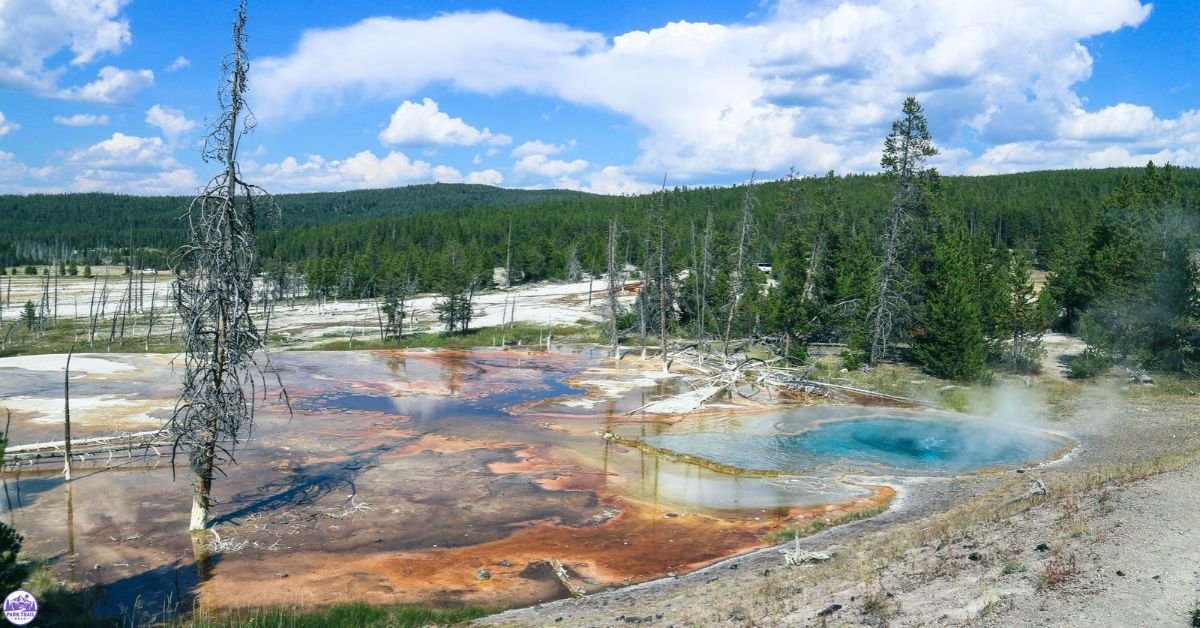
Most visitors come to Yellowstone National Park with one goal in mind: watching Old Faithful erupt. After the water shoots into the air and the crowd begins heading back toward the parking lot, however, they often miss the rest of the incredible geothermal landscape waiting just beyond the viewing area.
Upper Geyser Basin deserves more than a quick stop. Its network of paved paths and wooden boardwalks leads past colorful hot springs, steaming vents, and some of Yellowstone’s most fascinating geysers. You can also visit Morning Glory Pool, watch Riverside Geyser along the Firehole River, and explore the elevated paths around Geyser Hill.
The best part is that you do not need advanced hiking skills to enjoy most of this area. The main walking route is relatively flat, and several attractions are connected by maintained paths. The challenge is deciding how much time to spend at each stop, especially when an interesting geyser is close to erupting.
This guide explains how to plan your Upper Geyser Basin walk, which routes are worth taking, when to check eruption predictions, and what to know before visiting.
Quick Answer: Walking from the Old Faithful area to Morning Glory Pool and back takes approximately 2 to 2.8 miles, depending on your starting point. Adding the Observation Point and Geyser Hill trails makes the outing longer. Allow around 2.5 to 4 hours for a relaxed visit with sightseeing and possible eruption waits. The main paved route is mostly level, but some side trails include stairs and uphill sections.
Why Upper Geyser Basin Is Worth Exploring Beyond Old Faithful
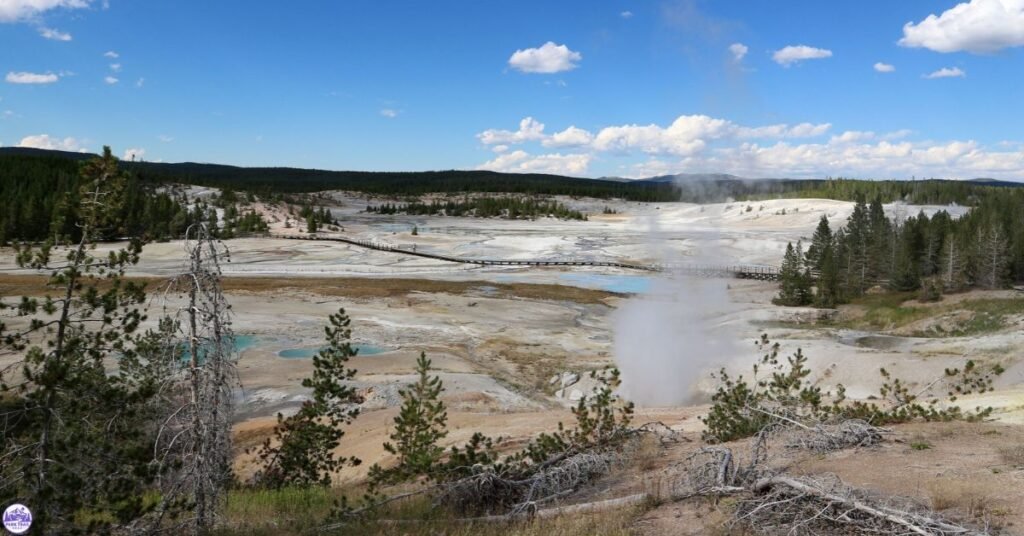
Old Faithful may be Yellowstone’s most recognizable geyser, but it is only one part of a much larger geothermal landscape.
Upper Geyser Basin is home to the world’s largest concentration of geysers. Its thermal features share an underground geothermal system, but each one behaves differently. Some geysers erupt regularly, while others remain quiet for hours or produce unexpected bursts of boiling water.
Walking beyond the main Old Faithful viewing area gives you a much better understanding of this landscape.
You will pass pools with remarkably clear blue water, mineral formations, bubbling springs, and steaming vents. The colors can look almost unreal, particularly when sunlight reaches the deeper sections of a hot spring.
There is also something special about seeing several geothermal features during one walk rather than spending your entire visit waiting for a single eruption.
The farther you travel along the main path, the more opportunities you have to find a quieter viewing spot. Crowds are generally concentrated around Old Faithful and the most popular geysers, although busy periods can affect the entire basin.
For visitors with only half a day near Old Faithful, this walking route offers an excellent introduction to Yellowstone’s geothermal activity.
Upper Geyser Basin is only one part of the park, so it helps to plan a few more stops around it. See our guide to the best Yellowstone park activities for other major geyser basins, wildlife areas, waterfalls, and scenic drives you can add to your trip.
Upper Geyser Basin Trail Options and Walking Distances
One thing worth understanding before you start is that the Upper Geyser Basin does not have just one hiking trail. It is a connected network of paved walkways, boardwalks, and smaller trails.
Your total distance depends on where you begin, which geysers you visit, and whether you add Observation Point.
Here are the main options to consider:
| Route | Approximate distance | Difficulty | Suggested time |
| Old Faithful viewing area | Short boardwalk walks | Easy | 20–40 minutes |
| Lower General Store to Morning Glory Pool and back | About 2 miles round-trip | Easy | 1–2 hours |
| Old Faithful Inn parking area to Morning Glory Pool and back | About 2.8 miles round-trip | Easy | 1.5–2.5 hours |
| Observation Point Trail | 1.6 miles round-trip | Moderate | 1–3 hours |
| Morning Glory Pool with additional Geyser Hill exploration | Varies with side routes | Easy to moderate | 2.5–4 hours |
These are planning estimates rather than a single official combined loop. Distances vary according to your starting point and the side trails you choose.
The National Park Service lists a relatively level, approximately 2-mile round-trip paved route from the Old Faithful Lower General Store to Morning Glory Pool. Its accessibility information also describes a longer 2.8-mile round-trip route starting from the Old Faithful Inn parking area.
You can check the official Old Faithful to Morning Glory Pool trail information before choosing your starting point.
The Geyser Hill and Observation Point Area
Geyser Hill makes a worthwhile addition if you have extra time and do not mind some stairs or uphill walking.
The area contains several interesting thermal features and offers elevated views across the basin. Observation Point is particularly appealing because it gives you a different perspective of Old Faithful and the surrounding geothermal landscape.
According to the National Park Service, the Observation Point Trail is approximately 1.6 miles round-trip. The route includes a climb, so it is more demanding than the main paved path to Morning Glory Pool.
Check the official Observation Point Trail description for the route and current conditions.
One useful planning tip: Do not assume that every side trail is flat simply because the main basin walkway is relatively easy. Families with strollers and visitors using mobility equipment should choose their route carefully.
How to Plan Your Walk Around Geyser Eruption Predictions
A little preparation can make a significant difference during your Upper Geyser Basin visit.
Several of Yellowstone’s geysers have predictable eruption patterns. Checking their estimated eruption times before walking can help you decide which direction to take and where to spend more time.
You do not need to plan every minute. Just knowing which major geysers might erupt during your visit gives you a better chance of seeing something special.
1. Check the Old Faithful Prediction First
Start by checking the latest eruption information.
During its operating season, the Old Faithful Visitor Education Center provides information about geyser activity. You can also check the official NPS current geyser activity page.
Old Faithful does not erupt at exactly the same interval every time. Its eruptions typically occur after intervals of approximately 68 or 94 minutes, with a prediction margin of around 10 minutes.
Weather, eruption characteristics, and other changes in geyser activity can affect predictions, so treat the estimated time as a window rather than a guaranteed appointment.
2. Decide Whether to Watch Old Faithful Before Walking
If Old Faithful is expected to erupt soon, it makes sense to watch it before heading toward the farther attractions.
The main viewing area has benches and convenient access from the parking and visitor center areas.
Once the eruption finishes, you can begin exploring the basin without feeling that you need to rush back immediately.
However, there is no need to wait for Old Faithful if its next prediction is several hours away. You can use that time to explore other geysers first.
3. Continue Toward Castle and Grand Geysers
Follow the paved path north from Old Faithful.
Castle Geyser is one of the most recognizable stops along this route. Its large cone-shaped mineral formation makes it stand out from the surrounding thermal features.
Castle currently averages approximately one major eruption every 14 hours, although minor eruptions can affect its predictability.
Further along the basin, Grand Geyser is another feature worth watching.
It is recognized as the tallest predictable geyser in the world. Its eruptions can send water more than 150 feet into the air, creating an impressive display.
The NPS lists an average interval of approximately 6 hours and 30 minutes for Grand Geyser, with a prediction margin of about one hour.
You can check the individual geyser details on the official Yellowstone eruption prediction page.
A practical tip: Do not assume that a quiet geyser is inactive. Some features show changes in their water levels, steam, or surrounding activity before erupting. Give the area time, but always remain behind the designated safety barriers.
4. Continue to Riverside Geyser and Morning Glory Pool
Riverside Geyser is another interesting stop along the northern part of the walking route.
It is positioned beside the Firehole River and can produce an impressive eruption over the water. When its eruption prediction matches your schedule, it is worth stopping to watch.
Continue along the main trail until you reach Morning Glory Pool.
This is a natural turning point for many visitors. A viewing platform allows you to look down into the pool and appreciate its unusual colors.
Take a few minutes here rather than immediately turning around. The surrounding geothermal landscape is also worth noticing.
5. Add Geyser Hill on Your Return
After visiting Morning Glory Pool, return toward the Old Faithful area.
Visitors with enough time and energy can add Geyser Hill and Observation Point to their outing. This provides another perspective of the basin and introduces you to thermal features away from the main paved route.
Remember that Observation Point involves uphill walking. It is an optional addition, not something you must complete to enjoy Upper Geyser Basin.
Important: Biscuit Basin is not an alternative walking extension at present. The area remains closed following the July 2024 hydrothermal explosion. The NPS confirmed in its July 6, 2026 update that the related closure remained in place because of continuing unpredictable hydrothermal activity. Check the official closure update before planning any nearby route.
Who Should Skip the Full Upper Geyser Basin Walk?
Although this is one of the most accessible geothermal sightseeing areas in Yellowstone, the longer walk is not ideal for every visitor.
Knowing when to shorten your route can make your visit much more enjoyable.
Visitors with limited time: If you have less than 90 minutes, do not rush all the way to Morning Glory Pool. Watch Old Faithful, explore some nearby boardwalks, and consider the shorter Observation Point route only if you have enough time and energy.
Travelers who prefer quiet trails: Upper Geyser Basin is a popular developed area. During busy summer periods, you should expect other visitors, families, and tour groups. Those looking for a more secluded experience may prefer exploring a different area of the park.
Visitors uncomfortable with exposed walkways: Most of the main route offers little shade. Bring suitable sun protection, and choose cooler morning or evening hours when conditions allow.
People sensitive to geothermal gases: Some thermal areas can have noticeable geothermal odors. If the smell or steam irritates your eyes or breathing, move away from the vent and follow ranger advice.
Cyclists expecting a continuous riding route: Bicycles are permitted on the paved route to Morning Glory Pool, but they are not permitted on the boardwalks. You must leave your bicycle at the designated racks before exploring those sections. Bikes are also not allowed on the unpaved path continuing beyond Morning Glory Pool toward Biscuit Basin.
The National Park Service provides further details in its official bicycle route information.
Best Time to Visit Upper Geyser Basin
The Upper Geyser Basin looks different throughout the year. Weather, visitor numbers, available services, and road access all influence the experience.
There is no single perfect month for everyone. The best time depends on whether you prefer warmer weather, fewer visitors, or dramatic steam rising from the hot springs.
| Season | What to expect | Planning considerations |
| Late May | Cool mornings, changing weather, and possible lingering snow | Check road and trail conditions before arriving |
| June–August | Warmer weather, longer daylight, and high visitor numbers | Arrive early and expect busier viewing areas |
| September | Cooler mornings, fall colors, and returning steam visibility | Check lodging, dining, and campground closing dates |
| October | Increasingly cold weather and changing road conditions | Confirm seasonal closures before driving |
| Winter | Snow-covered surroundings and restricted vehicle access | Winter travel generally requires designated oversnow transportation |
Late May: An Early-Season Experience
Late May can offer a nice opportunity to explore before the busiest summer period.
Mornings may be cold, and weather can change quickly. Some park roads and facilities also follow seasonal opening schedules.
Do not assume that every campground, restaurant, or visitor service is operating simply because Yellowstone has opened its main roads.
Summer: More Services but Larger Crowds
June through August is the main summer visitor season.
The warmer weather and longer daylight hours make it easier to spend several hours walking around the basin. However, popular viewing areas and parking lots can become crowded.
Starting early is generally a sensible choice, especially if you want to enjoy the boardwalks before the busiest part of the day.
September: A Good Balance for Many Visitors
September can be an appealing month for exploring the Upper Geyser Basin.
Cooler air makes the rising steam more noticeable, and the surroundings can feel different from the warmer summer months. Early mornings are particularly attractive for photography.
However, some hotels, restaurants, stores, and other services begin closing for the season. Check the current Yellowstone operating dates before making reservations.
Winter: Beautiful but More Complicated
Winter transforms Yellowstone into a very different landscape.
Snow and ice surround the geothermal features, while steam creates dramatic views across the basin.
However, access is much more restricted. Most park roads close to regular vehicle traffic during the winter season, and travel to Old Faithful generally requires approved snowcoach or snowmobile transportation when winter operations are running.
Check the NPS road schedule and seasonal operating information before arranging a winter visit.
November 2026 access update: Most Yellowstone roads and the West, South, and East entrances closed to regular vehicle traffic on November 1, 2026. The North Entrance to Northeast Entrance road remains open year-round, weather permitting. Oversnow travel on designated routes is scheduled to begin December 15, 2026, subject to conditions.
Parking, Access, and Avoiding the Old Faithful Crowds
Old Faithful has a developed visitor area with parking, visitor facilities, restaurants, and access to the surrounding boardwalk network.
However, summer visitors should not expect an empty parking lot, especially around the middle of the day.
Arriving earlier gives you a better chance of finding a convenient space and starting your walk before the busiest sightseeing periods.
A few practical suggestions can help:
- Check the current road conditions before driving to Old Faithful.
- Avoid arriving at the busiest part of the day when possible.
- Follow parking signs and use designated parking areas.
- Do not stop on the road or block other vehicles while looking for wildlife.
- Give yourself enough time for the drive because traffic, weather, and wildlife can cause delays.
One detail many first-time visitors overlook is transportation.
Yellowstone does not operate a general public transportation system for visitors traveling between its main attractions. Some commercial companies offer shuttle services and guided tours, but most independent visitors rely on their own vehicles.
You can confirm transportation details through the NPS Directions and Transportation page.
A seasonal reminder: The Old Faithful Visitor Education Center closes during the November 1–December 14 seasonal period listed by the NPS. If you are visiting during this time, do not build your itinerary around checking a prediction board inside the visitor center. Check the official geyser activity page and seasonal information instead.
What to Bring for the Upper Geyser Basin Walk
You do not need technical hiking equipment for the main route to Morning Glory Pool. Most of the walk follows maintained paved paths and wooden boardwalks.
Still, spending several hours outside in Yellowstone requires some preparation.
Comfortable walking shoes: Choose supportive shoes with good grip. The route is relatively level, but you may spend more time on your feet than expected when stopping at different geothermal features.
Sun protection: Much of the main basin is exposed. Bring sunscreen, a hat, and sunglasses, especially during summer.
Lightweight rain jacket: Yellowstone weather can change quickly. A windproof outer layer is useful even when the morning starts sunny.
Drinking water: Bring enough water for your planned walk. One liter per person is a reasonable starting point for this short outing, with more needed during warm weather or longer hikes.
Small backpack: A lightweight backpack makes it easier to carry water, snacks, and an extra clothing layer without having to hold everything.
Camera or smartphone: Morning Glory Pool and the surrounding geysers provide excellent photography opportunities. Keep your equipment secure and never move beyond designated viewing areas for a better angle.
One important reminder: If a hat, phone, or other item falls into a thermal pool, do not attempt to retrieve it. The water and surrounding ground can be dangerously hot.
Geothermal Safety Rules Every Visitor Should Know
Yellowstone’s geothermal features are beautiful, but they can also be extremely dangerous.
The ground around hot springs and geysers may look strong enough to support a person. In reality, some areas have a thin mineral crust covering boiling water or acidic mud.
This is why staying on designated boardwalks and marked trails is essential.
Follow these basic rules throughout Upper Geyser Basin:
Stay on the boardwalks. Never step onto the surrounding mineral ground, even if it looks dry or solid. The surface can collapse without warning.
Do not touch the water. Hot springs, runoff channels, and geyser water can cause serious burns.
Keep children close. Some boardwalk sections run beside deep or extremely hot thermal features. Children should remain within immediate reach of an adult.
Never cross safety barriers. They exist to protect visitors from dangerous ground and unstable geothermal areas.
Do not throw anything into the pools. Coins, rocks, rubbish, and other objects can damage fragile geothermal systems.
Be careful around steam vents. Avoid deliberately standing in concentrated steam or leaning toward active vents.
Yellowstone’s official Safety page provides additional information about geothermal hazards and other visitor risks.
Are Pets Allowed on the Boardwalks?
No. Pets are not allowed on Yellowstone’s boardwalks, hiking trails, backcountry areas, or thermal areas.
Under NPS rules, pets are generally restricted to developed areas within 100 feet of roads, parking areas, and campgrounds. They must remain physically controlled and on a leash no longer than six feet when not inside a vehicle or crate.
Trained service animals are treated differently under park regulations.
Read the official Yellowstone pet regulations before bringing an animal into the park.
Wildlife Etiquette Along the Firehole River
Although visitors mainly come to Upper Geyser Basin for its geothermal features, wildlife encounters are also possible.
Bison can sometimes walk across developed areas, while elk may be seen near the Firehole River and surrounding meadows. Other wildlife can occasionally appear along the edges of the basin.
Never assume that an animal is harmless simply because it is standing near a busy walkway.
Yellowstone’s wildlife viewing rules require visitors to maintain these minimum distances:
| Wildlife | Minimum distance |
| Bears, wolves, and cougars | 100 yards |
| Bison, elk, and other wildlife | 25 yards |
These rules apply even when animals seem calm or appear comfortable around people.
If a bison steps onto the boardwalk, stop and give it space. Do not attempt to squeeze past it or move closer for a photograph.
In some situations, the safest option is to turn around and wait until the animal has moved away.
Use binoculars or a zoom lens rather than approaching wildlife.
For more information, read the NPS Yellowstone wildlife safety guidelines.
Where to Stay and Find Services Near Upper Geyser Basin
The Old Faithful developed area is one of the most convenient places to stay when exploring the Upper Geyser Basin.
Several lodging options are located within walking distance of the main geothermal attractions.
Old Faithful Inn
Old Faithful Inn is a historic Yellowstone property located close to the famous geyser.
It offers accommodation, dining facilities, and convenient access to the surrounding boardwalks. Its seasonal operating schedule makes it important to reserve accommodation in advance.
Old Faithful Lodge Cabins
The Old Faithful Lodge Cabins provide another accommodation option near the basin.
The property also offers food services, including a cafeteria and bake shop during its operating season.
These can be convenient alternatives when you want something quick before continuing your sightseeing.
Old Faithful Snow Lodge
Old Faithful Snow Lodge is particularly useful for visitors planning a winter stay.
It offers lodging and dining facilities during its winter operating season. However, winter visitors generally need approved snowcoach or snowmobile transportation to reach the area.
You can compare the accommodation options using the official Yellowstone lodging information.
Nearby Campgrounds
There is no campground directly inside the Upper Geyser Basin thermal area.
Madison Campground is approximately 16 miles north of Old Faithful and offers a convenient alternative for visitors who prefer camping.
Grant Village Campground is another option farther south in the park.
Availability, operating dates, and reservation arrangements vary by campground and season.
Check the official Yellowstone campground information before choosing where to stay.
Food, Fuel, and Other Services
The Old Faithful developed area offers several visitor services, but their availability changes during the year.
Restaurants, cafeterias, stores, and medical services may close earlier than expected during shoulder seasons.
For example, the Old Faithful Lodge cafeteria operates seasonally, while the Snow Lodge has its own dining options and winter schedule.
Do not assume that a restaurant or shop will be open simply because you are visiting a popular attraction.
The NPS operating dates page is the best place to confirm current availability.
Common Mistakes to Avoid During Your Visit
Even a relatively easy walk can become frustrating when you do not plan around the conditions in the Upper Geyser Basin.
Here are some mistakes worth avoiding.
1. Watching Old Faithful and immediately leaving
Old Faithful is worth seeing, but the surrounding basin has much more to offer. Give yourself enough time to explore additional geysers and hot springs.
2. Ignoring eruption predictions
You could walk past a major geyser shortly before an eruption without realizing how close you were to seeing it. Check available predictions before starting your route.
3. Rushing to Morning Glory Pool
The journey is about more than reaching the final destination. Several geysers and thermal features deserve a stop along the way.
4. Assuming every trail is accessible
The main paved route is relatively level, but Geyser Hill and Observation Point include more demanding sections. Choose a route that matches your abilities.
5. Trying to visit closed areas
Biscuit Basin remains closed following the 2024 hydrothermal explosion. Always check current closures rather than relying on an older trail map.
6. Arriving without checking seasonal services
A visitor center, restaurant, or campground may be closed even when some parts of Yellowstone remain accessible.
7. Ignoring wildlife safety
Bison and elk can appear unexpectedly near developed areas. Maintain the required distance and never attempt to move an animal away from a walkway.
Frequently Asked Questions
How long does it take to walk the entire Upper Geyser Basin?
Allow approximately 2.5 to 4 hours for a relaxed visit that includes the walk to Morning Glory Pool, stops at major geysers, and additional exploration around Geyser Hill.
Your actual time depends on your starting point, walking pace, eruption predictions, and how long you spend at each attraction.
Is the Upper Geyser Basin wheelchair and stroller accessible?
The main paved route from the Old Faithful area toward Morning Glory Pool is relatively level and includes accessible walkways.
However, accessibility varies across the wider trail network. Geyser Hill and Observation Point include stairs, slopes, and less suitable sections.
Visitors with mobility requirements should review the official NPS accessibility information before choosing a route.
Why has Morning Glory Pool changed color?
Morning Glory Pool was once known for its deep blue appearance.
Over many years, visitors threw coins, rocks, rubbish, and other objects into the pool. This debris damaged the geothermal feature’s circulation and contributed to a reduction in water temperature.
Cooler water allowed different heat-loving microorganisms to grow around the pool, producing yellow, orange, and green colors.
The National Park Service also notes that natural temperature changes may contribute to the pool’s changing appearance.
You can learn more from the official NPS Morning Glory Pool page.
Can you watch Old Faithful without hiking the basin?
Yes. You can watch Old Faithful from its main viewing area without walking to Morning Glory Pool or taking the longer trails.
The benches near the geyser provide convenient viewing opportunities, and you can enjoy the main eruption without completing a longer walk.
Are dogs allowed on Upper Geyser Basin trails?
No. Pets are prohibited on the boardwalks, hiking trails, and thermal areas. General pet access is limited to designated developed areas under Yellowstone’s leash and distance rules.
Trained service animals are subject to separate regulations.
Can you ride a bicycle to Morning Glory Pool?
Yes. Bicycles are allowed on the paved trail between the Old Faithful area and Morning Glory Pool.
However, bicycles are not permitted on the boardwalks, and riders must use designated bicycle racks before exploring the geothermal features.
Is Biscuit Basin open to visitors?
No. As of November 2026, Biscuit Basin remains closed following the July 2024 hydrothermal explosion.
Check the National Park Service’s current closure announcements before planning a visit.
Final Thoughts: Make More of Your Upper Geyser Basin Visit
Old Faithful may be the reason you arrive at Upper Geyser Basin, but it should not necessarily be the end of your visit.
The paths beyond the viewing area introduce you to a much larger geothermal landscape, with impressive geysers, colorful hot springs, and the beautiful setting of Morning Glory Pool.
Start by checking the available eruption predictions, choose a walking distance that suits your schedule, and leave enough time to enjoy the stops along the way.
For most visitors, the main paved route and a few additional geothermal viewpoints provide an excellent half-day experience without requiring a difficult hike.
Most importantly, stay on designated paths, respect wildlife, and check current road conditions and seasonal closures before setting out.
A little planning will help you enjoy more of Yellowstone’s geothermal wonders without turning your visit into a rushed sightseeing stop.
Author Bio
Awais is the Founder and Editorial Director of ParkTrailsGuide. Working with a network of outdoor contributors and current park data, he creates deeply researched survival guides, packing frameworks, and safety blueprints for U.S. national parks. His mission is to turn complex official National Park Service data into clear, actionable travel resources.
1 thought on “Upper Geyser Basin Trail Guide: Exploring Old Faithful, Geyser Hill, and Morning Glory Pool”